Tag: AI tools

  • The Hidden Cost of Comparison Shopping: How an AI Shopping Assistant Saves You Hours

    The Hidden Cost of Comparison Shopping: How an AI Shopping Assistant Saves You Hours

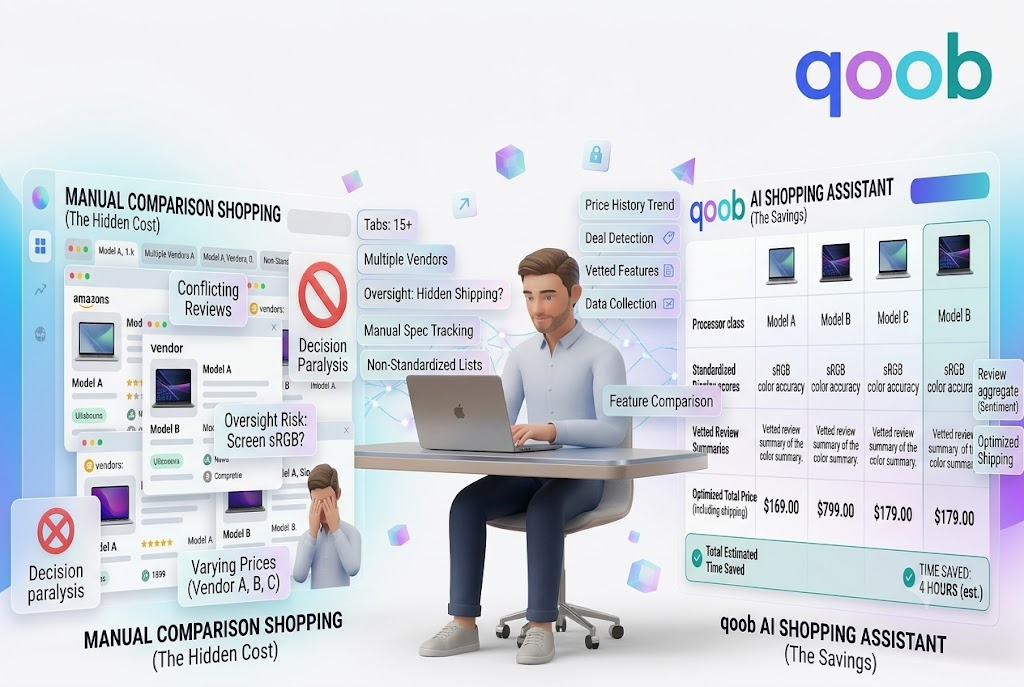
    Comparison shopping sounds simple. Find a few products, compare their prices and features, read some reviews, and choose the one that makes the most sense. In reality, it can take hours. You open one store, then another. You compare specifications. You check reviews. You search for discounts. You look for a better price. Then you realize two products use different names for almost identical features, so you start comparing those too. An AI shopping assistant can simplify that process by helping you compare products, weigh options, and focus on the factors that actually matter to you. Instead of turning every purchase into a research project, AI can help narrow the choices and support a faster decision.

    Why Does Comparison Shopping Take So Long?

    The problem is not a lack of information. It is too much information. A single product category can include dozens or hundreds of options. Each product may have different specifications, prices, reviews, bundles, warranties, and availability. You might compare:
    • Price
    • Features
    • Brand
    • Size
    • Quality
    • Reviews
    • Warranty
    • Shipping
    • Compatibility
    • Long-term value
    The more expensive or important the purchase, the more time people usually spend comparing. That makes sense. But there is a point where more research stops improving the decision and simply makes the decision harder. This is often called decision fatigue.

    What Is an AI Shopping Assistant?

    An AI shopping assistant is a tool that uses artificial intelligence to help you research, compare, and evaluate products. Instead of manually opening multiple shopping pages, you can ask a question in natural language. For example: “Which laptop is best for travel, writing, and light photo editing under $1,000?” Or: “Compare these two headphones for commuting and long flights.” Or: “Which option gives me the best value if I use it every day?” The AI can help organize the relevant factors so you spend less time jumping between pages. The goal is not simply to find the cheapest product. It is to find the product that makes the most sense for your needs.

    How Does an AI Shopping Assistant Save Time?

    The biggest time savings come from reducing repetitive research. Without an AI assistant, comparison shopping may look like this: Search → Open product page → Check specifications → Read reviews → Open another product → Repeat → Compare notes → Search for price → Decide An AI-assisted process can be much shorter: Ask → Compare → Review the recommendation → Decide That does not mean you should blindly accept the answer. It means you can start with a more useful comparison instead of assembling all the information yourself. The fewer tabs you need to manage, the less likely you are to forget why you opened the first one.

    What Does an AI Shopping Assistant Actually Compare?

    The comparison depends on what you ask. A good shopping assistant can help you evaluate factors such as:

    Price

    Which options fit your budget?

    Features

    Which product includes the features you actually need?

    Compatibility

    Will the product work with the devices, systems, or accessories you already use?

    Size

    Does it fit your available space?

    Performance

    Does it meet the level of performance you require?

    Reviews

    What are customers consistently saying about the product?

    Value

    Does the additional cost of one option provide enough benefit to justify it? This is where AI can be more useful than a simple price comparison app. A price comparison tool focuses heavily on cost. An AI shopping assistant can consider the reason behind the purchase as well.

    Why Is the Cheapest Product Not Always the Best?

    Price is important. It is just not the entire decision. Suppose you are comparing two coffee machines. One costs $100. The other costs $160. The cheaper model looks like the obvious winner. Then you discover that the more expensive machine has the capacity, durability, and features you need for daily use. The extra $60 may represent better value. This is why value matters more than price alone. AI can help you frame the comparison around your priorities rather than simply sorting products from cheapest to most expensive.

    Can You Compare Products With AI?

    Yes. One of the useful applications of AI shopping tools is helping users compare products with AI. You can provide:
    • Product names
    • Links
    • Prices
    • Specifications
    • Your budget
    • Your preferences
    • Your intended use
    The more relevant context you provide, the more useful the comparison can become. Instead of asking: “Which is better?” you can ask: “Which is better for a college student who carries a laptop every day and wants long battery life?” Now the question has a clear purpose.

    Why Does Context Matter in Shopping?

    The “best” product is rarely universal. A professional photographer and a casual smartphone user may want completely different cameras. A runner and a casual walker may want different shoes. A frequent traveler and someone who drives everywhere may have completely different priorities when buying luggage. Generic rankings cannot fully account for those differences. A personalized AI shopping assistant can consider the context you provide. The result can be more useful because the comparison is based on your actual priorities rather than an imaginary average shopper. The Qoob is designed around this broader idea of personal AI search, where relevant context can influence the answers you receive.

    How Is an AI Shopping Assistant Different From a Price Comparison App?

    The distinction is straightforward. A price comparison app primarily helps you compare prices. An AI shopping assistant can help you compare products and decisions.
    Price Comparison App AI Shopping Assistant
    Focuses mainly on price Considers multiple factors
    Compares product costs Can compare products by use case
    Often shows retailer options Can explain trade-offs
    Useful for finding deals Useful for deciding what fits your needs
    Requires more interpretation Can summarize differences
    Usually more transactional More decision-oriented
    A price comparison tool can answer: “Where is this product cheapest?” An AI shopping assistant can help answer: “Is this actually the right product for me?” Both have value. They simply solve different problems.

    Why Do People Open So Many Shopping Tabs?

    Because every retailer has a slightly different page. One store highlights price. Another highlights reviews. Another highlights technical specifications. A fourth has a detailed product description. Now you have four tabs and four different ways of presenting the same information. Your job becomes translating all of that into one decision. AI can help organize the information into a consistent comparison. That is particularly useful when product pages use different terminology or bury important specifications halfway down the page.
    View this post on Instagram

    A post shared by Qoob (@qoobsearch)

    How Can AI Help With Product Specifications?

    Specifications can be difficult to compare manually. Different brands may emphasize different measurements. One laptop might emphasize processor generation. Another might focus on RAM. Another might make storage capacity the headline. The buyer has to determine which differences actually matter. AI can help organize specifications into categories that are easier to compare. For example:
    Factor Product A Product B
    Price Higher Lower
    Battery Longer Shorter
    Weight Lighter Heavier
    Storage Larger Smaller
    Best for Frequent travel Home use
    The table does not make the decision for you. It makes the trade-offs easier to see.

    Can AI Help You Avoid Unnecessary Features?

    Yes. More features do not automatically mean better value. A product may include capabilities you will never use. You could end up paying significantly more for functions that look impressive on a specification sheet but have no practical benefit for you. An AI shopping assistant can help you separate: Must have from: Nice to have from: Completely unnecessary That can make a surprising difference to the final purchase. You do not need the most powerful version of something. You need the version that fits your actual use.

    How Can an AI Shopping Assistant Help With Budget?

    Start by telling it your budget. Then explain what matters most. For example: “Find the best option under $500. Prioritize durability and battery life over extra features.” Now the comparison has a clear constraint. The AI can focus on products that fit the budget while considering your priorities. This is different from simply sorting by price. The cheapest item is not necessarily the best value. The most expensive item is not necessarily the best product. The right choice sits somewhere between price and usefulness.

    How Can AI Reduce Decision Fatigue?

    Decision fatigue happens when you make too many choices. Comparison shopping creates a lot of them. Which brand? Which model? Which size? Which color? Which features? Which retailer? Which price? Which warranty? After enough comparisons, people often stop researching and choose whatever feels easiest. That can lead to poor decisions. An AI shopping assistant can reduce the number of choices you need to consider at once. Instead of 30 products, you may be able to narrow the list to three realistic candidates. That is a much easier decision.

    Should You Read Reviews Before Buying?

    Yes. But reading every review is rarely practical. AI can help summarize recurring themes. For example, reviews may consistently mention:
    • Excellent battery life
    • Difficult setup
    • Strong build quality
    • Poor included accessories
    • Good value
    • Weak customer support
    The important word is recurring. One angry review should not necessarily outweigh hundreds of positive experiences. Likewise, dozens of similar complaints may be worth investigating. Use summaries to identify patterns, then verify important details yourself.

    Can AI Help Identify Product Trade-Offs?

    This is one of its strongest uses. Every product has trade-offs. A lighter laptop may have fewer ports. A cheaper appliance may use less durable materials. A premium product may have better performance but cost significantly more. Instead of asking: “Which product is best?” ask: “What am I giving up if I choose Product A instead of Product B?” That question produces a much more useful comparison.

    What Makes a Good Shopping Recommendation?

    A useful recommendation should explain why it fits. A list of product names is not enough. You should understand: Best overall: Which product is the strongest balance? Best budget: Which option saves money without sacrificing what matters? Best premium: Which option is worth paying more for? Best for a specific use: Which product best matches your actual needs? This structure gives you a reason to choose rather than simply another list to research.

    How Does Qoob Fit Into AI Shopping?

    Qoob is designed as a personal AI search and decision-making tool. Shopping is one of the everyday decision areas the platform is built to support. The idea is simple. Instead of opening a dozen shopping tabs, you can ask a question about the options you are considering. Qoob can help you compare them and focus on the factors that matter to you. The platform’s smart search experience is built around short, useful answers rather than a long list of links. That makes product comparison part of a broader decision-support approach.

    What Should You Tell an AI Shopping Assistant?

    You do not need a huge prompt. Start with the information that actually affects the decision.

    Your budget

    Set a realistic price range.

    Your use case

    Explain what you are buying the product for.

    Your priorities

    Say what matters most.

    Your restrictions

    Mention compatibility, size, location, timing, or other constraints.

    Your deal-breakers

    Tell the system what you absolutely do not want. For example: “I need headphones under $250 for daily commuting. Prioritize noise cancellation and comfort. I do not care about microphone quality.” That is enough context to create a useful comparison.

    Can an AI Shopping Assistant Help With Gift Shopping?

    Yes. Gift shopping is often a perfect example of a decision with too many options. You know the recipient. You know your budget. You may know a few interests. But finding the right product can still take hours. You can provide the person’s age range, interests, relationship to you, budget, and occasion. The AI can help narrow the search. It can also compare options once you have several candidates. Instead of searching for “best gifts for someone who likes cooking,” you could ask for a shortlist based on the person’s specific interests and your budget.

    How Can AI Help You Compare Online Retailers?

    Price is only one factor when comparing retailers. You may also care about:
    • Shipping
    • Delivery time
    • Return policies
    • Warranty
    • Availability
    • Customer service
    • Seller reputation
    A product that costs $10 less is not necessarily better if delivery takes two weeks and the return process is a nightmare. A useful shopping comparison should consider the complete purchase experience.

    What Are the Risks of Using AI for Shopping?

    AI can save time. It can also make mistakes. Product information changes. Prices change. Stock changes. Models can be updated. A product description may also be interpreted incorrectly. That means you should verify important information before making a significant purchase. Check the retailer’s current product page. Confirm the price. Review the return policy. Check compatibility. For expensive purchases, verify specifications directly with the manufacturer or retailer. AI should help with the research. It should not replace common sense.

    How Do You Know When to Stop Comparing?

    This is one of the biggest hidden costs of shopping. People often believe another five minutes of research will produce a better choice. Sometimes it does. Often it produces three more options and another hour of uncertainty. A useful stopping point is when:
    • You have two or three strong candidates
    • They all fit your basic requirements
    • You understand the main trade-offs
    • You know which option best matches your priorities
    • You have checked the important details
    At that point, additional research may not add much value. Make the decision. Close the tabs. Return to your life.

    AI Shopping Assistant vs. Doing Everything Manually

    Manual Shopping Research AI-Assisted Shopping
    Search multiple retailers Ask one focused question
    Open many product pages Compare selected options
    Copy specifications manually Summarize differences
    Read many reviews Identify recurring themes
    Track prices yourself Include price in the comparison
    Decide from scattered information Review a structured recommendation
    Often takes longer Designed to reduce research time
    AI does not eliminate the need for judgment. It reduces the administrative work around the judgment. That is the real time-saving opportunity.

    How Can You Use AI Without Over-Relying on It?

    Treat the AI as a research assistant. Not the final authority. Use it to:
    • Narrow your options
    • Identify differences
    • Organize specifications
    • Summarize patterns
    • Clarify trade-offs
    • Structure your decision
    Then verify the details that matter. This approach gives you the efficiency of AI without handing over complete control of your purchasing decisions.

    Is AI Shopping Better Than a Traditional Search?

    It depends on what you need. Traditional search is useful when you want to browse retailers, read original reviews, find product pages, or explore a large amount of information. AI shopping is useful when you already know the decision you need to make and want help comparing options. That distinction matters. If you want to discover everything, browse. If you want help deciding, ask.

    Final Thoughts

    Comparison shopping has a hidden cost. It is not only the money you spend. It is the time you spend researching, comparing, opening tabs, reading reviews, checking prices, and second-guessing the final decision. An AI shopping assistant can reduce some of that work by organizing product information around what actually matters to you. It can help compare products, identify trade-offs, narrow your options, and turn a huge list into a manageable shortlist. At The Qoob, shopping comparisons are part of a broader personal AI search experience built around everyday decisions. The goal is not to buy the most expensive product. It is not even necessarily to find the cheapest. It is to find the option that fits your needs well enough that you can stop researching and get on with your day. Because at some point, the tenth product comparison is not research. It is procrastination wearing a very convincing spreadsheet costume.

    Frequently Asked Questions

    What is an AI shopping assistant?

    An AI shopping assistant uses artificial intelligence to help you research, compare, and evaluate products based on factors such as price, features, use case, and personal preferences.

    Yes. AI can help compare product specifications, prices, features, use cases, and other criteria. You should verify important details before making a significant purchase.

    A price comparison app primarily focuses on finding and comparing prices. An AI shopping assistant can consider price alongside features, preferences, use case, and trade-offs.

    Yes. You can provide product names, specifications, links, budgets, and preferences and ask the AI to compare the options based on what matters to you.

    No. A useful recommendation should consider value and suitability rather than focusing only on the lowest price.

    Yes. Asking an AI to compare two specific products can be especially useful because the number of variables is easier to manage.

    Start with your budget, intended use, priorities, restrictions, and deal-breakers. This context helps produce a more relevant comparison.

    AI can help summarize recurring themes in product reviews. However, important claims should still be checked against current customer reviews and reliable product information.

    AI can be useful for organizing information and supporting decisions, but it can make mistakes or use outdated information. Verify current prices, specifications, availability, warranties, and return policies before buying.

    Yes. You can provide the recipient’s interests, age range, your relationship, budget, and occasion to generate and compare suitable gift options.

    Yes. An AI assistant can help compare factors such as price, shipping, delivery, returns, warranty, and availability when reliable information is available.

    Stop when you have a few strong options, understand the key trade-offs, and have enough information to make a confident decision. Continuing to compare indefinitely rarely improves every purchase.

    The Qoob is a personal AI search and decision-making app that includes shopping comparisons among its everyday use cases. Its purpose is broader than traditional price comparison.

    No. The Qoob is designed so users can ask questions in natural language without needing to learn specialized AI prompting.

    Yes. The Qoob is designed to help users compare options, understand information, and make everyday decisions with short, relevant answers.

  • From Google to AI Search: How to Break the Habit of Scrolling Through Links

    From Google to AI Search: How to Break the Habit of Scrolling Through Links

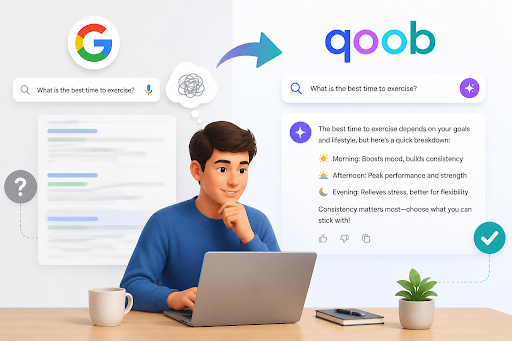
    For years, searching the internet has meant typing a question into Google and opening a list of results. You scan a few headlines, skip the sponsored placements, open a couple of pages, scroll past introductions, and try to figure out which answer actually matters.

    That habit is changing. AI Search gives you another way to find information by focusing on the answer instead of making you work through a long list of links. The Qoob is built around this idea, giving users short, useful answers for everyday questions and decisions.

    Why Are People Tired of Scrolling Through Search Results?

    Traditional search is useful when you want to explore.

    The problem starts when exploration becomes the default.

    A simple question can quickly become a research task.

    You search for a restaurant.

    You open review pages.

    You compare menus.

    You check locations.

    You search again for opening hours.

    You read comments.

    Eventually, your original five-second question becomes a fifteen-minute project.

    The internet has somehow turned “Where should I eat?” into an administrative task.

    That is one reason AI Search has gained attention.

    Instead of sending you somewhere else to find the answer, AI-powered search can bring relevant information together and present it directly.

    What Is AI Search?

    AI Search uses artificial intelligence to understand a user’s question and provide a direct response.

    Traditional search generally matches your query with pages that may contain the information you need.

    AI Search focuses more heavily on understanding intent and generating a useful answer from relevant information.

    That changes the experience.

    Instead of asking:

    “Which page should I open?”

    You can ask:

    “Which option makes the most sense for me?”

    The first question is about finding information.

    The second is about making a decision.

    The Qoob positions its smart search experience around this second use case, giving users direct answers designed to help them decide and move on.

    How Is AI Search Different From Google?

    Google and AI Search can both help you find information, but they approach the task differently.

    Traditional Google Search usually gives you a collection of pages to explore.

    AI Search aims to interpret the question and provide a direct answer.

    Traditional SearchAI Search
    Gives you a list of linksGives you a direct response
    Requires more browsingReduces the need to browse
    You compare multiple pagesThe system can synthesize information
    Search is often keyword drivenSearch can focus more on intent
    You do more of the evaluationThe answer helps narrow the decision
    Useful for broad researchUseful for quick questions and decisions


    This does not mean AI Search should replace traditional search completely.

    Google is still useful when you want original sources, specific websites, detailed research, or broad exploration.

    AI Search simply provides another workflow.

    Why Do Short Answers Matter?

    Most everyday questions are not academic research projects.

    You may want to know:

    • What should I cook tonight?
    • Which hotel makes more sense?
    • Where should I go this weekend?
    • Which product fits my needs?
    • What is the simplest way to do something?

    These questions do not necessarily require twenty tabs.

    They require a useful answer.

    The Qoob is designed around short answers that help users get to a decision without excessive scrolling or unnecessary text.

    That creates a different relationship with search.

    You are not searching for the perfect webpage.

    You are searching for an answer.

    How Does AI Search Understand What You Mean?

    One weakness of traditional keyword search is that your wording matters a lot.

    You may know exactly what you mean, but the search engine only sees the words you typed.

    AI Search can interpret natural-language questions more effectively by considering the intent behind them.

    For example:

    “Best restaurants”

    is broad.

    “Where can I get a casual dinner near downtown that is good for a quick meal?”

    contains much more useful context.

    The second question gives the system a better idea of what you actually want.

    The Qoob describes this as understanding intent. Its system is designed to interpret what you are trying to find even when your question is not perfectly worded.

    Do You Need Special AI Prompting Skills?

    No.

    This is one of the biggest differences between modern AI tools.

    Some AI systems expect you to learn how to write detailed prompts.

    That can be useful for complex tasks.

    But everyday search should not require a course in prompt engineering.

    The Qoob is designed so you can ask questions in plain language.

    You can type the question the way you would say it to another person.

    That makes the search process feel much more natural.

    How Can Personal AI Search Change the Experience?

    A generic answer is not always useful.

    Two people can ask exactly the same question while wanting different outcomes.

    Consider:

    “Where should I go on vacation?”

    One person wants a quiet beach.

    Another wants nightlife.

    Another wants a family-friendly destination.

    Another wants to spend as little as possible.

    That is where personal AI search becomes useful.

    The system can consider relevant context and preferences rather than treating every question as if it came from the same anonymous person.

    The Qoob describes this approach on its personalization and privacy page, where answers are designed around what the user has shared and what matters to them.


    View this post on Instagram


    A post shared by Qoob (@qoobsearch)

    What Does Personalization Actually Mean?

    Personalization means the system can use relevant information about your preferences and previous interactions to make answers more useful.

    You still ask the question.

    The difference is that the system has more context for interpreting what you mean.

    This can help with repeated decisions.

    For example, suppose you frequently ask about restaurants.

    Knowing that you prefer casual places, avoid certain foods, or usually eat within a particular area can make future answers more relevant.

    The goal is not to make decisions for you.

    It is to reduce the amount of explanation needed each time.

    Why Is Context Important in AI Search?

    Context is often what turns a generic response into a useful one.

    Compare:

    “What laptop should I buy?”

    with:

    “What laptop should I buy for travel, writing, and light photo editing?”

    The second question gives the system a better target.

    Personalized search takes that idea further by allowing relevant preferences and previous context to influence the experience.

    The Qoob describes this as search that pays attention to what matters to you rather than treating every query as completely isolated.

    Is AI Search Better for Everyday Questions?

    It can be.

    Everyday searches usually have a clear practical objective.

    You want an answer.

    You want to choose something.

    You want to know what to do.

    You usually do not want to spend ten minutes reading about the topic first.

    This is where AI Search can reduce friction.

    The Qoob focuses on everyday decisions such as planning, shopping, recipes, travel, hobbies, and quick personal research.

    These are small decisions.

    There are lots of them.

    Saving a few minutes on each one adds up.

    What Happens When You Stop Searching for Pages?

    Your behavior changes.

    Instead of thinking:

    “Which result should I open?”

    You start thinking:

    “What exactly do I want to know?”

    That is an important shift.

    The quality of the search experience becomes less dependent on your ability to scan dozens of links.

    You can focus on the actual problem.

    For example, instead of searching:

    “best weekend trips near me”

    you might ask:

    “Where should I go this weekend for a quiet two-day trip with good food and minimal driving?”

    That is a much more useful question.

    AI Search is designed for this style of interaction.

    Does AI Search Eliminate the Need for Traditional Search?

    No.

    Traditional search still has clear advantages.

    You may want to:

    • Read original research
    • Visit a specific website
    • Compare multiple sources
    • Check official documentation
    • Follow breaking news
    • Browse images or videos
    • Research a topic in depth

    In those situations, a list of links can be exactly what you need.

    AI Search is most useful when the goal is a practical answer rather than exhaustive browsing.

    The two approaches can coexist.

    How Is Qoob Different From a General AI Chatbot?

    A general chatbot is often built around conversation.

    You ask something.

    It responds.

    You ask a follow-up.

    It responds again.

    That can be useful for writing, brainstorming, learning, and extended discussions.

    Qoob focuses more narrowly on search and decisions.

    The company’s positioning is simple: it is designed to help you find useful information and decide what to do, rather than keep you in a long AI conversation.

    That distinction is explained in The Qoob’s guide to how it differs from other AI apps.

    Why Does No-Scroll Search Feel Different?

    Because the workflow is shorter.

    Traditional search can look like:

    Question → Results → Links → Reading → Comparing → Deciding

    AI Search aims for:

    Question → Answer → Deciding

    The second path does not eliminate thinking.

    It reduces the amount of browsing required before you can think clearly about the decision itself.

    That is the point.

    What Kinds of Questions Work Well With AI Search?

    The best questions usually have a practical outcome.

    Recommendations

    “Which restaurant should I choose?”

    Comparisons

    “Which of these two products is better for a small apartment?”

    Planning

    “How should I plan a three-day trip?”

    Explanations

    “Explain this concept in simple terms.”

    Everyday decisions

    “What should I cook tonight?”

    Quick research

    “What should I know before choosing this option?”

    These searches benefit from concise answers.

    They do not necessarily require a long chain of webpages.

    How Can You Ask Better AI Search Questions?

    You do not need long prompts.

    You need useful context.

    A good question usually makes three things clear:

    What do you want?

    State the actual outcome.

    What matters?

    Include the factors that influence your decision.

    What constraints do you have?

    Budget, location, time, preferences, or other limits can make the answer much more useful.

    For example:

    Instead of:

    “Hotels in Miami”

    try:

    “Which Miami hotels are best for a three-night couples trip near the beach with a mid-range budget?”

    The second question gives the system something to work with.

    For additional guidance, see How to Get Better Answers From AI Search.

    Does AI Search Save Time?

    That is one of its main goals.

    The Qoob positions its search experience around saving time by reducing the need to scroll through long result pages, close pop-ups, and navigate sponsored content.

    The platform also reports survey results indicating that users found its answers shorter and easier to understand than answers from several other search and AI tools.

    The practical idea is simple.

    If a question takes one minute to answer instead of ten minutes to research, that is time you get back.

    One decision does not seem like much.

    Hundreds of small searches over a year are another story.

    What About Ads in AI Search?

    Advertising is one of the biggest differences between search experiences.

    Traditional search engines often place sponsored results near the top of the results page.

    Those placements can compete visually with the information you actually wanted.

    The Qoob states that it does not place sponsored results inside the answer and instead uses a single non-intrusive advertisement at the bottom of the page.

    The goal is to keep the answer itself focused.

    That is part of the company’s broader effort to create a less cluttered search experience.

    Why Does Trust Matter in AI Search?

    A short answer is only useful if you can trust it enough to act on.

    That creates a challenge for every AI-powered search product.

    Users need answers that are understandable, relevant, and based on reliable information.

    The Qoob positions trust as an important part of its product experience and describes its answers as short and trustworthy.

    That does not mean users should blindly accept every AI-generated response.

    For high-stakes decisions, you should still verify important information and consult authoritative sources.

    AI Search should reduce effort.

    It should not eliminate judgment.

    Can AI Search Make You More Productive?

    It can reduce the time you spend on low-value browsing.

    Consider all the tiny searches you make during a normal week.

    Where should you eat?

    What should you buy?

    How do you solve a small problem?

    What is the easiest way to do something?

    None of these questions is individually huge.

    Together, they can consume a surprising amount of time.

    An AI Search tool that gives you a clear answer can reduce that repeated research overhead.

    The Qoob is specifically positioned as a tool for everyday decisions, where speed and clarity matter more than endless exploration.

    What Is the Difference Between AI Search and “Ask AI”?

    “Ask AI” is a broad phrase that describes asking an artificial intelligence system a question.

    AI Search is a broader product category focused specifically on finding information and answering search questions using AI.

    The difference is largely about purpose.

    An AI assistant may help you write a message.

    An AI Search product focuses on helping you find an answer.

    Qoob combines this search-first approach with personalization and decision support.

    How Can You Break the Scrolling Habit?

    The first step is changing what you expect from search.

    You do not always need ten sources.

    You do not always need the longest article.

    You do not always need to read everything before making a simple decision.

    Instead, try asking a direct question.

    Then make the question specific.

    Then evaluate the answer.

    When you need deeper research, go back to traditional browsing.

    The point is not to stop scrolling forever.

    It is to stop scrolling when you do not need to.

    When Should You Still Use Traditional Search?

    Use traditional search when you need breadth.

    For example:

    Deep research: You want multiple perspectives and original sources.

    Specific websites: You know exactly where you want to go.

    Official information: You need a government, manufacturer, university, or other authoritative source.

    Detailed comparison: You want to examine several options yourself.

    Current events: You want to see how multiple publishers are reporting an event.

    AI Search is better suited to the question behind those searches when the goal is simply to make a decision faster.

    How Does Qoob Fit Into the Search Landscape?

    The search experience is changing.

    Traditional search gives you pages.

    Chatbots give you conversations.

    Personal AI Search aims to sit between those models.

    It can understand your question, use relevant context, and provide a concise answer aimed at helping you make a decision.

    The Qoob describes itself as a search and decision-making app built for everyday use.

    That is a narrower purpose than a general AI assistant.

    It is also different from a conventional search engine.

    The focus is not on keeping you exploring.

    It is on helping you move forward.

    What Does the Future of Search Look Like?

    Search is moving toward more natural interaction.

    People are becoming less interested in remembering the right keywords and more interested in simply asking questions.

    They also expect technology to understand context.

    Instead of:

    “Hotels New York cheap”

    users increasingly ask:

    “Where should I stay in New York for a weekend if I want to be close to restaurants but keep the room under my budget?”

    That is a natural question.

    AI Search is designed for that kind of interaction.

    The technology still has to improve.

    Accuracy matters.

    Privacy matters.

    Trust matters.

    But the direction is clear.

    Search is becoming less about finding pages and more about understanding intent.

    Final Thoughts

    For years, searching meant opening links and deciding which page deserved your attention.

    AI Search offers another approach.

    Ask a natural question.

    Give the system useful context.

    Get a concise answer.

    Then decide.

    You will still need traditional search for deep research, original sources, and specific websites. But you do not need to treat every small question like a research project.

    The Qoob is built around this simpler workflow.

    Its personal AI search approach focuses on relevant answers, user context, and everyday decisions rather than endless lists of links.

    At The Qoob, the goal is straightforward: give you useful information without making you work through unnecessary clutter first.

    The future of search may not be about finding more links.

    It may be about needing fewer of them.

    Frequently Asked Questions

    What is AI Search?

    AI Search uses artificial intelligence to understand questions and provide direct answers rather than relying only on a list of webpages.

    Traditional Google Search generally gives users links to explore. AI Search focuses more on understanding the question and producing a direct response.

    No. AI Search and traditional search are useful for different tasks. AI Search can be useful for quick questions and decisions, while traditional search remains valuable for detailed research and finding specific sources.

    Personal AI Search uses relevant context and preferences to make answers more tailored to the individual user rather than giving the same generic response to everyone.

    Not necessarily. The Qoob is designed around plain-language questions, so users do not need to learn specialized AI prompting techniques.

    Questions involving recommendations, comparisons, planning, explanations, and everyday decisions are particularly suitable for an answer-focused AI Search experience.

    It can reduce the need to open and compare multiple pages for simple questions. The amount of time saved depends on the task and the quality of the answer.

    No AI system should be treated as infallible. For important or high-stakes decisions, verify information using reliable and authoritative sources.

    AI Search focuses primarily on finding information and helping users reach answers. AI chatbots are generally built for broader conversation, writing, brainstorming, and content generation.

    Qoob is a personal AI search and decision-making app designed to provide short, relevant answers for everyday questions.

    Yes. Qoob is designed to use relevant user context and preferences to make answers more useful and personal.

    Qoob states that it does not place sponsored results inside its answers and instead uses a single non-intrusive advertisement at the bottom of the page.

    No. The best approach is to use the right tool for the task. Use AI Search for quick answers and decisions, and traditional search when you need deeper research or original sources.

    Ask clear questions, include the context that matters, mention important constraints, and state what kind of answer you want.

    The Qoob states that its service is free and does not require a subscription.

  • How to Make Better Buying Decisions: A Simple Framework for Comparing Products

    How to Make Better Buying Decisions: A Simple Framework for Comparing Products

    Buying a new product should be straightforward. Yet many purchases become frustrating because there are too many options, conflicting reviews, and endless comparison articles. Whether you’re shopping for electronics, home appliances, software, or everyday essentials, making the right choice often feels harder than it should.

    Instead of relying on guesswork, use a structured approach. An AI decision assistant can help organize information, but understanding a simple framework for Better Buying Decisions allows you to evaluate products more confidently regardless of what you’re purchasing.

    Why buying decisions feel overwhelming

    Consumers have access to more information than ever before. Product pages, customer reviews, comparison websites, influencer recommendations, and AI-generated summaries all compete for your attention.

    While having more information sounds helpful, it often creates the opposite effect. Instead of making decisions easier, it leads to analysis paralysis.

    Common challenges shoppers face

    Many buyers struggle because they:

    • Compare too many products
    • Focus on features they may never use
    • Read hundreds of conflicting reviews
    • Prioritize price over long-term value
    • Delay purchasing because they’re afraid of making the wrong choice

    A simple evaluation process helps eliminate these problems.

    Start with your actual needs

    Before comparing products, identify what you’re trying to solve.

    Ask yourself:

    • What problem am I trying to fix?
    • Which features are essential?
    • Which features are optional?
    • How often will I use this product?
    • What’s my realistic budget?

    Answering these questions prevents unnecessary comparisons between products that don’t fit your needs.

    Avoid shopping based only on popularity

    The highest-rated product isn’t always the best choice.

    For example:

    • A professional camera may be unnecessary for casual photography.
    • A premium laptop may offer features you’ll never use.
    • A large kitchen appliance may not fit your available space.

    The best product is the one that solves your specific problem efficiently.

    Compare products using the same criteria

    Many people compare products randomly.

    Instead, evaluate each option using identical factors.

    Comparison Factor Why It Matters
    Price Determines affordability and value
    Features Shows whether the product meets your needs
    Quality Indicates expected durability
    Ease of use Affects the everyday experience
    Customer support Helps after the purchase
    Warranty Protects your investment
    Reviews Highlights real-world experiences

    Looking at every product through the same lens makes comparisons much more objective.

    Step 1: Separate essential features from extras

    Not every advertised feature deserves equal attention.

    Essential features

    These directly affect your purchase.

    Examples include:

    • Battery life
    • Performance
    • Size
    • Storage capacity
    • Build quality

    Nice-to-have features

    These may improve the experience but aren’t necessary.

    Examples include:

    • Premium finishes
    • Extra accessories
    • Decorative design elements
    • Specialty modes

    Focusing on essentials helps avoid paying more for features you’ll rarely use.

    Step 2: Compare total value, not just price

    The cheapest option isn’t always the most affordable over time.

    Consider:

    • Expected lifespan
    • Maintenance costs
    • Replacement expenses
    • Warranty coverage
    • Reliability

    Sometimes spending slightly more initially reduces future costs significantly.

    Think beyond the purchase price

    For example:

    • Energy-efficient appliances reduce utility bills.
    • Durable furniture lasts longer.
    • Better software may reduce ongoing subscription costs.

    Value comes from long-term usefulness rather than the initial receipt.

    Step 3: Read reviews strategically

    Customer reviews are valuable when used correctly.

    Instead of reading hundreds of comments, look for consistent patterns.

    Pay attention to repeated mentions of:

    • Build quality
    • Customer service
    • Reliability
    • Ease of setup
    • Long-term performance

    If the same strengths or weaknesses appear repeatedly, they’re probably worth considering.

    Ignore isolated complaints

    Every product receives occasional negative reviews.

    Focus on recurring issues instead of one unusual experience.

    Step 4: Compare products side by side

    A comparison table makes decision-making much easier.

    Feature Product A Product B
    Price ✔ ✔
    Key Features ✔ ✔
    Warranty ✔ ✔
    Customer Reviews ✔ ✔
    Ease of Use ✔ ✔
    Overall Value ✔ ✔

    Seeing information together often makes the better option much clearer.

    Step 5: Consider your future needs

    Many purchases are long-term investments.

    Ask yourself:

    • Will this still meet my needs in two years?
    • Can it expand with future requirements?
    • Will accessories remain available?
    • Is software support likely to continue?

    Thinking ahead reduces the chance of replacing products sooner than expected.

    Avoid common buying mistakes

    Buying emotionally

    Sales, countdown timers, and limited-time promotions often create unnecessary pressure.

    Take a moment to evaluate whether the product actually meets your needs.

    Comparing too many products

    Comparing ten nearly identical products usually creates confusion.

    Narrow your shortlist to three or four serious options.

    Ignoring trusted sources

    Look for reliable information instead of relying entirely on advertisements or influencer opinions.

    Balanced comparisons usually produce better decisions.

    Forgetting long-term ownership

    Ownership includes maintenance, accessories, upgrades, and support, not just the purchase price.

    How AI helps simplify product comparisons

    Artificial intelligence can reduce the amount of manual research required when comparing products.

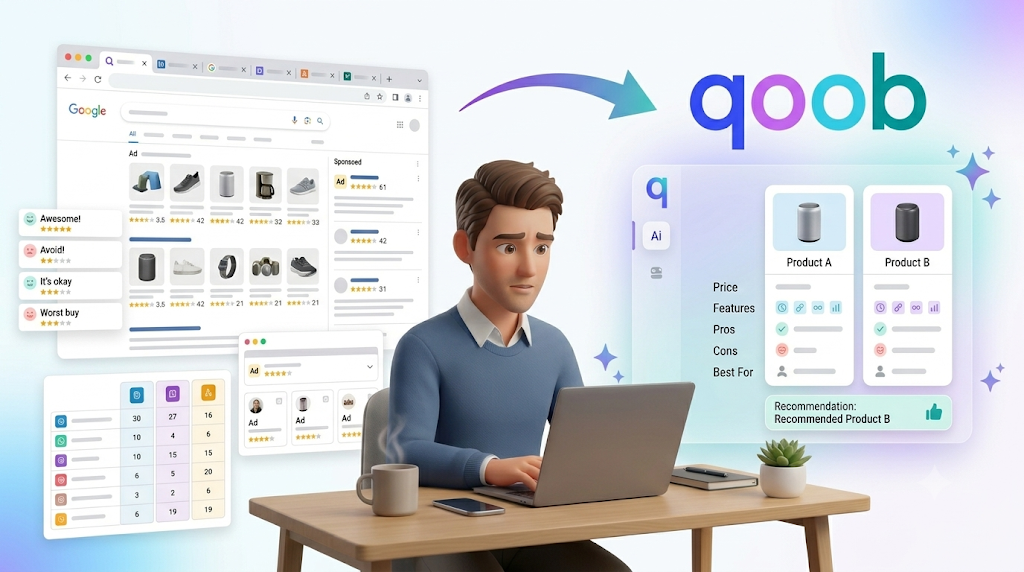
    Instead of opening dozens of tabs, modern AI tools can organize information, summarize differences, and highlight the factors that matter most.

    For example, QOOB Search focuses on delivering more organized answers that help users compare products more efficiently instead of forcing them to browse through multiple search results.

    Why context creates better recommendations

    Two people shopping for the same product may need completely different recommendations.

    Someone buying a laptop for gaming has different priorities than someone purchasing one for office work.

    That’s why personalized context produces stronger recommendations than generic comparison lists.

    This idea is explored further in What Makes QOOB Different From Other AI App, which explains how contextual understanding can improve decision-making.

    A practical framework for Better Buying Decisions

    You can simplify almost every purchase by following the same process:

    1. Define your actual need.
    2. Set a realistic budget.
    3. List essential features.
    4. Compare products using identical criteria.
    5. Review long-term value.
    6. Read reviews for recurring themes.
    7. Shortlist two or three options.
    8. Make your decision without endless comparisons.

    Following this process removes much of the uncertainty from buying decisions.

    Benefits of using a structured comparison process

    A simple framework helps you:

    • Save research time
    • Reduce impulse purchases
    • Focus on value instead of marketing
    • Compare products objectively
    • Feel more confident after purchasing

    Most importantly, it helps you avoid information overload.

    FAQ

    1. What are Better Buying Decisions?

    Better Buying Decisions involve evaluating products using consistent criteria such as price, quality, features, reviews, and long-term value instead of making impulsive purchases.

    2. How many products should I compare?

    Three to four products are usually enough. Comparing too many options often creates confusion instead of improving your decision.

    3. Should price be the most important factor?

    No. Price should be balanced with quality, reliability, warranty, customer support, and expected lifespan to determine overall value.

    4. How do AI tools help compare products?

    AI tools organize product information, summarize differences, and highlight relevant features, making research faster and easier.

    5. Why is context important when comparing products?

    The best recommendation depends on your specific goals, budget, and intended use. Context allows recommendations to be more relevant than generic product rankings.

    Conclusion

    Making Better Buying Decisions doesn’t require reading hundreds of reviews or comparing dozens of products. A simple framework based on your needs, budget, essential features, and long-term value helps you make confident choices while avoiding information overload.

    As AI continues to improve product research, decision-making becomes faster and more personalized. To learn more about how contextual AI supports smarter comparisons, visit QOOB and explore how modern search experiences help simplify complex buying decisions.

  • Why People Are Switching from ChatGPT to Specialized AI Search Tools

    Why People Are Switching from ChatGPT to Specialized AI Search Tools

    Artificial intelligence has transformed how people find information, solve problems, and make decisions. While ChatGPT remains one of the most popular AI tools available today, many users are now exploring specialized AI search platforms designed to provide faster, more personalized, and more relevant answers. This shift has fueled growing interest in solutions like a modernQoob Search AI search engine built for everyday information discovery.

    As users seek better ways to find accurate information, a new question is emerging: Is a specialized AI search tool a better choice than a general-purpose chatbot?

    The Rise of Personal AI Search

    Traditional search engines provide a list of links, while chatbots generate conversational responses. However, many users need something in between – a system that understands their intent and delivers personalized results instantly.

    This is where personal AI search comes in.

    If you’ve ever wondered what is personal AI search, it’s an AI-powered approach that learns from your preferences, understands context, and provides highly relevant answers tailored to your needs. Rather than forcing users to sift through dozens of websites or lengthy conversations, it focuses on delivering useful information quickly.

    Platforms like Qoob Search are leading this evolution by creating a smarter search experience that combines AI intelligence with personalized results.

    Why Users Are Looking Beyond ChatGPT

    ChatGPT is an excellent tool for content generation, brainstorming, and conversation. However, many users are discovering limitations when they need quick, precise answers for everyday questions.

    Some common reasons people search for the best ChatGPT replacement app include:

    Faster Information Retrieval

    When users have simple questions, they often want direct answers rather than lengthy discussions. A specialized AI search engine is designed to prioritize speed and relevance, helping users find information without unnecessary back-and-forth interactions.

    Personalized Search Experience

    Most people ask similar types of questions repeatedly. A personal AI search platform can learn from user behavior and deliver more customized results over time, creating a more efficient experience.

    Better Support for Everyday Decisions

    Modern consumers use AI for much more than writing content. They rely on it for travel planning, product comparisons, health research, financial insights, and daily problem-solving.

    A dedicated decision making AI tool can help users evaluate options quickly and make informed choices with greater confidence.

    Reduced Information Overload

    One of the biggest challenges online is sorting through excessive information. Specialized AI search platforms focus on delivering concise, relevant insights instead of overwhelming users with countless sources and conflicting opinions.

    ChatGPT vs Qoob: Understanding the Difference

    The discussion around ChatGPT vs Qoob is not necessarily about which platform is better overall. Instead, it comes down to user goals.

    ChatGPT excels at:

    • Content creation
    • Brainstorming ideas
    • Writing assistance
    • Creative projects
    • Conversational interactions

    Qoob Search focuses on:

    • Personalized search experiences
    • Fast information retrieval
    • Everyday question answering
    • Context-aware recommendations
    • Decision support and research

    For users who primarily need accurate answers and efficient information discovery, a specialized AI app for everyday questions may provide a more streamlined experience.

    How Qoob Search Meets Modern User Needs

    Today’s users expect technology to understand their intent immediately. They want answers without spending time refining prompts or reviewing multiple sources.

    Qoob Search addresses these expectations by combining intelligent search capabilities with personalized AI assistance. As a modern personal AI search platform, it helps users:

    • Find information faster
    • Discover more relevant results
    • Improve daily productivity
    • Make informed decisions
    • Reduce time spent searching online

    Whether someone is researching a purchase, comparing services, planning a trip, or simply looking for reliable information, Qoob Search offers a focused experience designed around real-world needs.

    The Future of AI Search

    The future of AI is becoming increasingly personalized. Users no longer want generic search results or one-size-fits-all responses. They expect AI systems to understand their preferences, context, and goals.

    This trend is driving demand for specialized solutions that go beyond traditional search and chatbot experiences.

    As more people explore alternatives and compare ChatGPT vs Qoob, platforms built around personalized information discovery are gaining attention. The growing popularity of personal AI search reflects a broader shift toward smarter, faster, and more user-focused technology.

    For individuals seeking a practical AI app for everyday questions, better decision-making support, and a more efficient search experience, specialized AI search tools may represent the next step in the evolution of online information discovery.

    FAQs

    1. What is personal AI search?

    Personal AI search uses AI to provide personalized, relevant answers based on your search intent and preferences.

    1. What is Qoob Search?

    Qoob Search is a personal AI search engine that helps users find answers, insights, and recommendations faster.

    1. How is Qoob Search different from ChatGPT?

    Qoob Search focuses on personalized search and quick answers, while ChatGPT is designed for conversations and content generation.

    1. Can Qoob Search help with everyday decisions?

    Yes. Qoob Search helps users compare options, research topics, and make informed decisions quickly.

    1. Is Qoob Search a good ChatGPT alternative?

    Yes. Users looking for faster answers and a personalized AI search experience often choose Qoob Search as a ChatGPT alternative.

  • Why AI Search Is Replacing Google for Everyday Questions?

    Why AI Search Is Replacing Google for Everyday Questions?

    Searching online for answers has always meant navigating long lists of links. Google and other traditional search engines often provide results that are broad or hard to filter. Personal AI search such as Qoob change this experience. They focus on providing relevant, context-aware answers for everyday questions, making research faster and decision-making easier.

    With AI search, users no longer have to spend time reading multiple articles to find what they need. A smart search app guides them directly to useful answers and insights, acting as an everyday AI assistant.

    Why AI Search Is Gaining Popularity

    1. Speed and Efficiency
      Personal AI search apps quickly process queries and return relevant answers. Instead of scrolling through pages of results, users get concise, actionable information. This makes AI search assistants ideal for both casual and professional use.
    1. Context-Aware Guidance
      Unlike generic search engines, AI-powered search understands the context of a question. This means Qoob can provide answers tailored to the user’s intent, making it a personal AI search that supports smarter decisions.
    2. Versatile Use Cases
      Users can leverage AI search for:
      • Researching topics for work or study
      • Planning trips, projects, or purchases
      • Making everyday decisions efficiently
    3. Simplified Decision-Making
      AI decision support apps reduce the need to compare multiple sources. Users can rely on the AI to summarize information, highlight options, and guide choices, saving both time and effort.

    How Qoob Leads the AI Search Revolution

    Qoob is designed to be a smart search app and everyday AI assistant. Its AI engine provides relevant suggestions and organizes answers logically. Users can explore topics in-depth without confusion or information overload. Unlike traditional search engines, Qoob acts as a personal AI search companion, streamlining research and daily decisions.

    Use Cases for AI Search with Qoob

    1. Students and Learners
    Students can use Qoob to quickly research topics for assignments, projects, or exams. The app provides relevant, context-aware answers that save time, making studying and understanding complex subjects more efficient.

    2. Professionals and Knowledge Workers
    Professionals can leverage Qoob as a smart search app to gather industry trends, market data, or reports. Instead of filtering through multiple search results, Qoob acts as an AI decision support app, helping users make informed choices faster.

    3. Everyday Decision-Makers
    Qoob is ideal for anyone needing guidance on everyday questions, from planning a trip, comparing products, or exploring new hobbies. As an everyday AI assistant, it simplifies decision-making by delivering clear and relevant answers in one place.

    4. Researchers and Content Creators
    Content creators, journalists, and researchers can use Qoob to find accurate information efficiently, explore multiple angles on a topic, and summarize relevant insights without spending hours sifting through links.

    Qoob makes these tasks faster and more efficient, offering a reliable alternative to generic search engines.

    Conclusion

    AI search is gradually replacing traditional search engines for everyday questions. Personal AI search apps like Qoob provide speed, relevance, and decision support. They are versatile, efficient, and user-friendly, making them the best choice for work, study, and daily life. For anyone seeking reliable answers and smarter guidance, AI search has become an essential tool.

    FAQs

    1. What is AI search?
    AI search uses intelligent algorithms to provide context-aware answers rather than just links, guiding users efficiently through questions.

    2. How is personal AI search different from Google?
    A personal AI search app like Qoob understands context and delivers relevant, actionable answers instead of generic results.

    3. Can AI search help with decision-making?
    Yes. AI decision support apps provide summaries, suggestions, and insights to help users make informed choices quickly.

    4. Who can benefit from AI search?
    Students, professionals, and everyday users benefit from AI search because it simplifies research and everyday decision-making.

    5. Why is Qoob considered one of the best AI search apps?
    Qoob combines fast results, context-aware answers, and a simple interface, making it a smart search app and reliable AI assistant.

  • What Makes Qoob Different from Every Other AI App

    What Makes Qoob Different from Every Other AI App

    New AI apps launch every week, and most of them do similar things. They write text, answer questions, or chat. That is useful, but it leaves a simple question open: which app actually helps you find what you need and decide what to do? That is the gap Qoob is built for. Qoob is a personal AI search app that gives short, relevant answers for everyday decisions, not another general-purpose chatbot.

    Most AI apps were not built for everyday decisions 

    Most AI tools are built to generate content. You ask, they produce a block of text. That works for drafting and brainstorming. It is less helpful when you have a real choice to make and you want a clear answer fast.

    Qoob takes a different job. It is built around search and decisions, the small everyday ones that add up: where to eat, what to cook, which option to pick, how to plan the weekend. You get a short answer you can act on instead of a wall of text or ten open tabs. 

    What personal AI search means 

    Personal AI search is search that pays attention to you, not the same generic result for everyone. Instead of returning a list of links ranked for the average person, Qoob focuses on what you are actually asking and gives back something relevant and short. 

    The personal part matters. Two people can type the same question and mean different things. A personal AI search app aims to answer what you mean, then keep your answers useful for the kinds of decisions you make often.

    Short answers instead of a stack of links 

    Traditional search usually means opening several pages, comparing them, and deciding which to trust. That is a lot of work for a small question. 

    Qoob trims that down. It pulls things together and gives you a concise, useful answer so you can move on. For everyday questions, that is the difference between researching for ten minutes and deciding in one. 

    Built around your context 

    Generic tools treat every question as a fresh start. Qoob is designed to keep your context in mind so answers feel less generic and more like they are meant for you. 

    That context is what makes a personal AI search app feel different from a plain search box. It is about answers that fit how you think and what you care about, pointed at a real decision rather than a page of results. 

    Everyday ways people use Qoob 

    Qoob is built for the practical stuff, not abstract research: 

    • Planning a trip and comparing options 
    • Choosing a recipe with what is already in the kitchen 
    • Shopping and weighing two products 
    • Picking a hobby project or a place to go 
    • Doing quick personal research without the rabbit hole 
    • Organizing scattered thoughts into a clear next step 

    These are the moments where a short, relevant answer beats a page of links. 

    How Qoob is different from a chatbot 

    A general chatbot is built to talk and to generate. Qoob is built to help you find and decide. The two can look similar from the outside, but the goal is different. A chatbot hands you text. Qoob gives you an answer pointed at a decision. 

    If you mostly want to draft, brainstorm, or chat, a general assistant is fine. If you want search that feels personal and answers that help you choose, that is Qoob. 

    Trying Qoob 

    Qoob is easy to start. There is no complicated setup, and you can try the personal AI search experience and see how short, relevant answers feel for your own everyday questions. 

    FAQs 

    1. How is Qoob different from other AI apps? 

    Qoob is a personal AI search app, not a content generator. Most AI tools produce text. Qoob focuses on giving short, relevant answers that help you make everyday decisions faster. 

    2.What is a personal AI search app? 

    A personal AI search app is search that focuses on what you mean and what matters to you, then gives a short, relevant answer instead of a list of links. Qoob is built for this. 

    3.What is the difference between Qoob, Qoob Search, and Qoob AI? 

    Qoob is the app. Qoob Search, sometimes written qoobsearch, is the search experience inside it. Qoob AI is the personalization and answer engine that powers it. They all refer to the same product. 

    4.Is Qoob a chatbot? 

    No. Qoob is a personal AI search app focused on answers and decisions. A chatbot is built to generate text and conversation. Qoob is built to help you find what you need and decide. 

    5.What can I use Qoob for? 

    Qoob is built for everyday decisions like travel planning, recipes, shopping, hobbies, and quick personal research. You ask a question and get a short, useful answer.