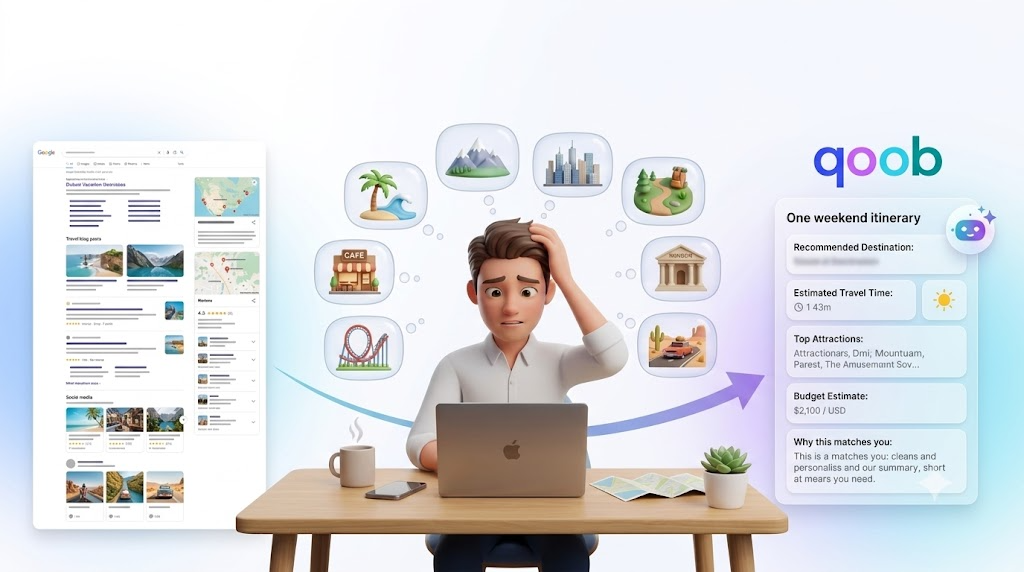
Weekend planning should be simple. In reality, it turns into an exhausting loop of tabs, maps, reviews, reels, and half-finished ideas. You start with one clear goal, then somehow end up with twenty places and no decision. That is the modern travel problem in a nutshell.
If you are trying to figure out Where to Go this weekend, the answer usually comes from narrowing the choice, not collecting more of them. The best option is not the one with the most reviews or the longest list of attractions. It is the one that fits your time, budget, energy, and the kind of weekend you actually want.
Why weekend planning feels harder than it should
People often think the problem is lack of options. It is usually the opposite. There are too many places to compare, and most of them look decent at first glance. That makes the decision feel important even when it is just a weekend plan.
The result is endless scrolling. You check one site, then another, then a few social posts, then back to the first site because now nothing feels clear. By the time you pick a place, the weekend already feels less relaxing than the actual trip.
Too many choices create decision fatigue
Every extra option adds mental work. Once the brain starts comparing nearly identical choices, it gets tired fast. That tiredness makes people delay the decision or settle for the easiest option rather than the best one.
This is why a simpler process works better than trying to evaluate everything at once.
Start with the kind of weekend you want
Before you search for places, decide what kind of weekend you are actually after. That single step removes a lot of confusion.
Ask what you want from the trip
Are you looking for:
- A quiet break
- A family day out
- A food-focused trip
- Something outdoorsy
- A short overnight escape
- A low-cost local outing
Once you know the goal, the list of possible places gets much smaller. A beach trip, a museum visit, and a mountain drive may all sound nice in theory, but they do not serve the same purpose.
Match the plan to your energy level
A good weekend plan should fit how much effort you want to spend.
If you feel tired, choose something simple. If you want a full day out, choose something with more to do. If you only have half a day, do not plan like you have a full one.
That sounds obvious, but people ignore it constantly and then wonder why the trip feels rushed.
Use your time as the first filter
Time is one of the easiest ways to narrow your options. A trip that takes too long to reach may not be worth it for a short weekend. A nearby destination may be better if you only have a day or two.
Decide how far you want to go
Think in terms of travel time, not just distance.
| Available Time | Best Type of Trip |
|---|---|
| Half day | Local park, market, nearby cafe, short event |
| One day | City visit, beach town, scenic drive |
| One night | Small getaway, nature stay, food trip |
| Two days | More relaxed weekend trip, major attraction, nearby region |
This simple filter stops you from wasting time on places that look good but do not fit your schedule.
Build the decision around your budget
Budget shapes the trip more than people admit. A place may look perfect until you add up transport, food, tickets, parking, and a hotel.
Think in categories, not guesses
Estimate these costs:
- Travel
- Stay
- Meals
- Entry fees
- Parking or local transport
- Extra spending
Once you know the rough total, it becomes easier to rule out places that would stretch the weekend too far. This keeps the plan realistic instead of aspirational.
Expensive is not always better
A more expensive destination does not automatically deliver a better weekend. Sometimes a nearby place with good food, a walkable area, and one or two things to do is more satisfying than a pricey trip packed with stress.
That is one reason smarter planning tools are useful. They help people compare choices with context instead of guessing based on marketing or popularity. For a broader look at search and planning behavior, QOOB Search shows how faster answers can reduce the time spent browsing.
Think about what kind of experience you want
Two people can visit the same place and have completely different weekends. That is because the trip experience matters as much as the destination.
Choose by activity style
Some people want to relax. Others want to explore. Others want food, shopping, or outdoor time.
Here are a few simple categories:
- Relaxing: spa, beach, cabin, quiet town
- Active: hiking, cycling, walking tours
- Social: city stay, live music, food district
- Family-friendly: zoo, park, museum, aquarium
- Low-effort: local staycation, cafe hopping, short scenic drive
Once the activity style is clear, you do not need to compare every possible destination. You only compare the ones that match the experience.
Compare only a few good options
The fastest way to choose is not to look at everything. It is to look at three or four strong options and compare them directly.
Use the same criteria every time
Compare each place using the same questions:
- How long will it take to get there?
- What will it cost?
- What can we do there?
- Does it match our energy level?
- Does it fit the weather?
- Is it easy to book or visit?
This keeps the process fair and removes a lot of noise.
A simple comparison table
| Option | Travel Time | Cost | Main Activity | Best For |
|---|---|---|---|---|
| Nearby park | Short | Low | Walking, relaxing | Easy local break |
| Food district | Short to medium | Medium | Dining, browsing | Social weekend |
| Scenic town | Medium | Medium to high | Exploring, overnight stay | Full weekend trip |
| Outdoor trail | Medium | Low | Hiking, nature | Active day out |
A table like this makes the best choice obvious much faster than endless scrolling does.
Check the details that actually affect the weekend
A destination can sound great and still be wrong for the moment. Before you decide, check the practical details.
Weather matters more than people expect
A beach trip loses appeal in bad weather. A hiking plan is not great during heavy rain. A city trip can still work in poor weather if there are indoor options. The weather should influence the choice, not be ignored until the last minute.
Opening hours and booking rules matter too
Some places require advance booking. Others have limited weekend access. A place might look perfect online but be closed or crowded when you want to go. That is why a quick check saves trouble later.
Local convenience is part of the decision
Think about parking, food access, walkability, and how easy it will be to move around once you arrive. A weekend trip should feel smooth, not like a puzzle.
Let smarter search do the heavy lifting
A lot of scrolling happens because search tools give results, but not decisions. They show you options, yet they leave the comparison work to you.
That is where a better search experience helps. Instead of forcing you to sift through pages of unrelated results, it can organize choices around your actual needs. This is part of what QOOB is designed to do, by focusing on context and relevance instead of just volume.
Why context beats raw search results
If a tool understands your time, budget, and trip style, it can cut the list down much faster. That means less clicking, less comparing, and less mental friction.
It also means fewer dead ends. You stop wasting time on places that are technically interesting but clearly wrong for your weekend.
For a deeper look at how faster answer systems support this process, see How QOOB Search Helps You Find Answers Quickly.
A simple framework for weekend decisions
If you want a repeatable method, use this one:
1. Set the goal
Pick the type of weekend you want.
2. Set the limit
Decide how much time and money you want to spend.
3. Remove mismatched options
Cut anything that does not fit your goal or schedule.
4. Compare only the best few
Look at the strongest three or four choices.
5. Commit
Pick one and stop reopening the question every ten minutes.
That last step matters. A decision is only useful if you actually act on it.
Common mistakes that keep people scrolling
Searching without a goal
If you do not know what kind of trip you want, every result looks possible and nothing feels right.
Comparing too many places
Once you go past a few strong options, your judgment starts to blur.
Ignoring travel friction
A beautiful place that takes too much effort may not be worth it for a short weekend.
Waiting too long to decide
The longer you delay, the fewer good options remain.
FAQ
1. How do I decide where to go this weekend fast?
Start with your goal, budget, and available time. Then compare only three or four places that match those limits. That keeps the choice simple and realistic.
2. Why is it so hard to choose a weekend trip?
It is hard because there are too many options and too much information. Endless scrolling creates decision fatigue, which makes the choice feel bigger than it needs to be.
3. What is the best way to compare weekend destinations?
Use the same criteria for every option. Look at travel time, cost, activities, weather, and convenience. A simple comparison table can help a lot.
4. Can search tools help me choose where to go?
Yes. Better search tools can reduce noise, organize options, and show more relevant results based on your actual needs instead of just broad keywords.
5. What should I avoid when planning a weekend?
Avoid searching without a goal, comparing too many places, and overlooking practical details like weather, timing, and travel friction.
Conclusion
Choosing where to go this weekend should not feel like a part-time job. The trick is to stop treating every option as equal and start filtering by the things that actually matter. Time, budget, energy, weather, and trip style will tell you far more than endless tabs ever will.
If you want a faster way to cut through the noise, start with QOOB and use a more focused planning approach before the scrolling eats your whole weekend.