Search has changed a lot, even if the old habits have not. People still type a question, hit enter, and expect a useful answer. The difference is that the system behind the answer now works in a very different way. That shift matters when the question is simple, when the topic is messy, and when the user does not want to spend twenty minutes sorting through tabs like a lost intern with a browser addiction.
If you are trying to understand AI Search, the easiest way to think about it is this: traditional search gives you places to look, while AI Search tries to give you the answer itself. That sounds small, but it changes almost everything about how people find, compare, and use information.
Why people are noticing the difference
Traditional search has been useful for years because it does one thing well. It finds pages that match words. That works fine when you already know what you want or when the topic is narrow. It works less well when you need a direct answer, a comparison, or a recommendation that depends on context.
AI Search changes the experience because it tries to understand intent. Instead of only matching keywords, it looks at meaning, phrasing, and the situation behind the question. That makes it easier to get an answer that feels useful right away.
The real difference is the output
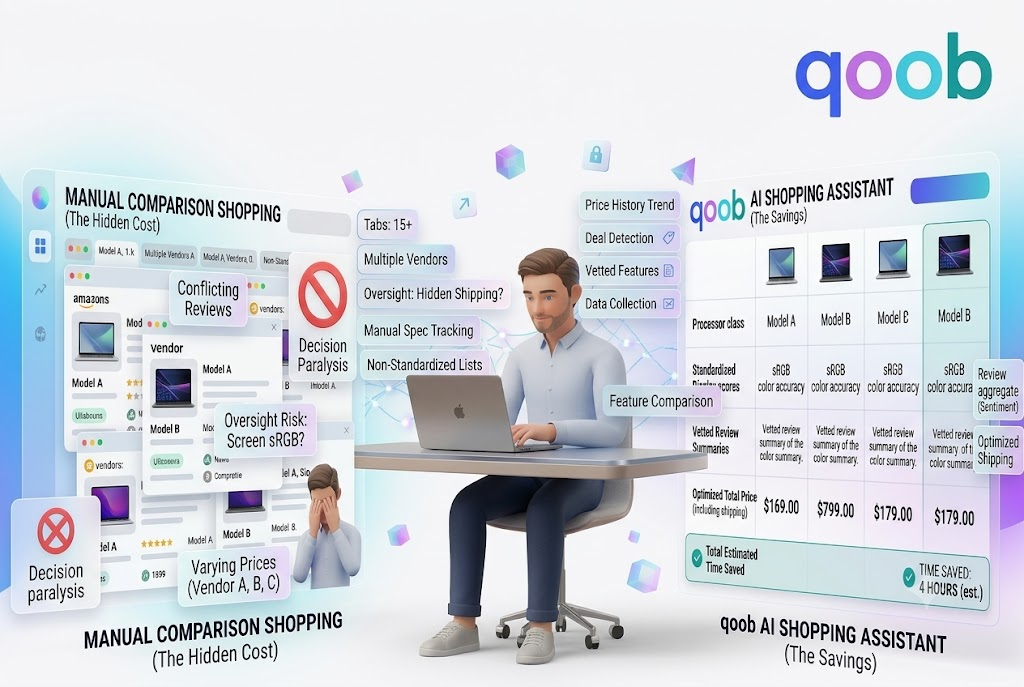
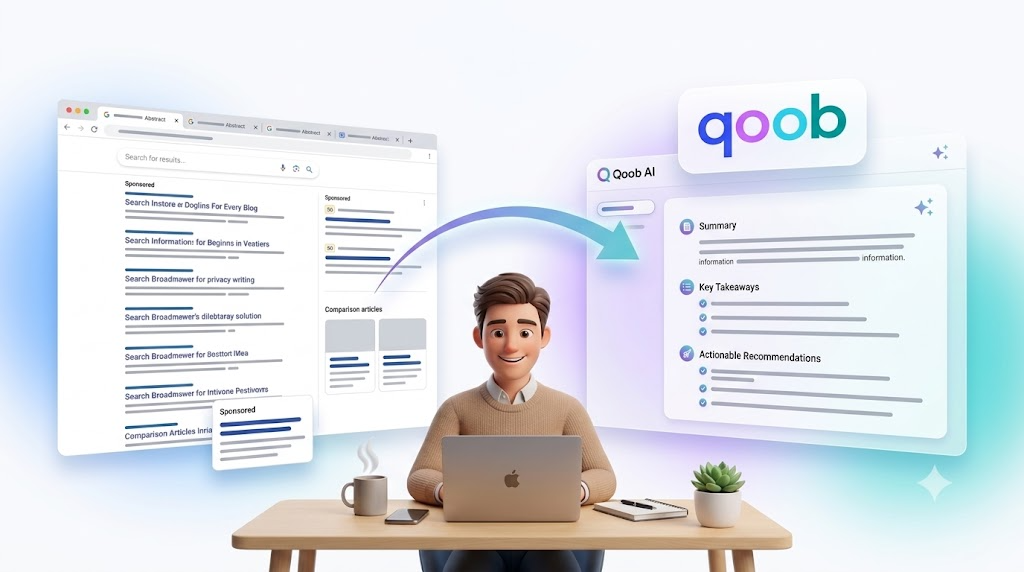
Traditional search points you to sources. AI Search can summarize those sources, connect them, and narrow the result into something easier to use. In practice, that saves time. It also cuts down on the back-and-forth of clicking, opening, closing, and trying again.
How traditional search works
Traditional search is built around indexing web pages and ranking them based on signals such as keywords, links, authority, freshness, and relevance. It does a solid job when the query is specific and the available pages are strong.
What it does well
Traditional search is good for:
- Finding a known website
- Looking up official pages
- Checking recent news
- Comparing source material
- Discovering a wide range of pages on one topic
Where it struggles
It becomes less efficient when users want:
- A direct answer
- A comparison of options
- A recommendation based on context
- Help deciding between similar choices
- A summary that removes noise
That gap is why many users now look for more focused tools instead of just using a general search engine for everything.
How AI Search works differently
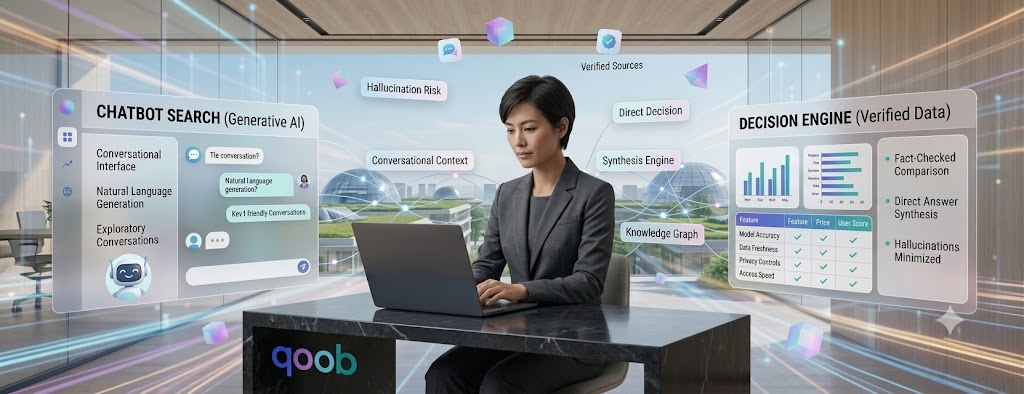
AI Search does more than match words. It tries to understand the intent behind the request and then organize the answer around that intent. In other words, it is closer to a guided assistant than a list of links.
It focuses on meaning, not just keywords
A traditional search engine may show results because they contain the right phrase. AI Search can often tell whether the user wants an explanation, a comparison, a recommendation, or a short answer.
That matters because many searches are not really searches. They are decisions disguised as questions.
It can connect information faster
Instead of making the user read ten pages, AI Search can synthesize information into one response. That means the user spends less time collecting facts and more time using them.
For a closer look at how this works in practice, QOOB Search shows how a more focused search experience can reduce the amount of manual browsing needed to get to a useful answer.
Table: AI Search vs. Traditional Search
| Feature | Traditional Search | AI Search |
|---|---|---|
| Main goal | Find matching pages | Deliver a useful answer |
| Best for | Browsing sources | Understanding intent |
| Result format | List of links | Summary or response |
| User effort | Higher | Lower |
| Context awareness | Limited | Stronger |
| Decision support | Weak | Better |
| Comparison help | Manual | Faster |
| Use case fit | General discovery | Questions, comparisons, decisions |
This is the core shift. Traditional search helps you look. AI Search helps you decide.
Why this matters for everyday questions
Most people do not search the web because they want a history lesson in page rank theory. They search because they need help now. They want to know what to buy, where to go, what to cook, how to compare options, or what problem to solve next.
AI Search is better for decision-heavy questions
When the question requires judgment, not just facts, AI Search usually feels more helpful. For example:
- Which product fits my needs?
- What is the difference between these two options?
- What should I do first?
- What answer applies to my situation?
Those are not simple lookup tasks. They are decision tasks. That is where AI Search tends to outperform older search patterns.
Traditional search still has a place
Traditional search is not dead. Far from it. It still matters for:
- Official websites
- Research
- Timely updates
- Shopping comparisons
- Deep source checking
The point is not that one system replaces the other in every case. The point is that they solve different problems.
Why context matters so much
Context is the biggest advantage AI Search has. A question means more when the system knows the situation around it.
For example, the phrase “best laptop” means something different for:
- A student
- A gamer
- A designer
- An office worker
- A traveler
Traditional search often treats the phrase the same way for all of them. AI Search can adjust the answer based on the likely need. That creates a better result with less effort from the user.
Personalization changes the experience
This is where search begins to feel more useful. A more personalized system does not just return data. It returns data that fits the user’s purpose.
That is one reason people look at personal AI search as a better fit for modern decision-making. It reduces friction by narrowing the answer to the situation, not just the query.
What users notice first
Most users do not care about the technical model behind the search. They care about the result.
Faster answers
AI Search often gives the answer in a form that is easier to read right away.
Less scrolling
Instead of digging through pages, users can get a shorter path to the answer.
Better comparisons
It is easier to compare products, places, or ideas when the system organizes the differences for you.
Fewer dead ends
Traditional search can lead to irrelevant pages that waste time. AI Search reduces that problem by staying closer to the user’s intent.
When AI Search is especially useful
AI Search is strongest when the task requires interpretation.
Good examples include:
- Choosing between products
- Summarizing a topic
- Finding a quick explanation
- Comparing options
- Planning a trip
- Deciding what to do next
In each case, the user is not just looking for raw information. They want a filtered answer.
Where traditional search still wins
It would be foolish to pretend the older system has no value. Humans do love forcing one tool to replace another just because it sounds neat.
Traditional search still works well when:
- You need original source material
- You want exact website pages
- You need current updates from multiple publishers
- You are doing research that needs verification
- You want to explore a broad topic from the ground up
That is why the future is likely not one tool replacing the other. It is a mix of both, used at the right moment.
The shift in user behavior
More people are moving toward systems that answer questions directly because time matters. They do not want to interpret ten blue links every time they ask a simple question. They want the search experience to fit the task.
Search is becoming more task-based
Instead of asking, “What pages mention this phrase?” people are asking:
- What should I choose?
- What is the difference?
- What is the best option?
- What should I do next?
AI Search matches that behavior much better than older search models.
This changes how websites should think
Sites no longer just compete for rankings. They also compete for clarity, usefulness, and answer quality. Content that helps users quickly will matter more than content that simply repeats keywords.
For a broader view of this shift, AI search tools are becoming more important because they reduce the gap between question and answer.
A simple way to choose the right search method
Use traditional search when you need:
- Sources
- News
- Official pages
- Broad exploration
Use AI Search when you need:
- A direct answer
- A comparison
- A recommendation
- A summary
- Context-aware guidance
That simple split helps people choose the right tool faster.
Conclusion
AI Search and traditional search are not the same tool with a new label. They solve different problems. Traditional search is built for finding pages. AI Search is built for understanding questions and giving faster, more useful answers.
That difference matters most when the user needs help deciding, comparing, or acting quickly. If the goal is less scrolling and more clarity, AI Search has the edge. To see how that works in practice, visit QOOB and explore a more focused way to search.
FAQ
1. What is the main difference between AI Search and traditional search?
Traditional search returns pages that match keywords. AI Search tries to understand the meaning of the question and give a more direct answer.
2. Is AI Search replacing traditional search?
Not completely. Traditional search still matters for sources, news, and broad discovery. AI Search is better for context, summaries, and decision-making.
3. Why is AI Search better for everyday questions?
It reduces the amount of time spent scrolling and comparing. It gives a faster answer when the user wants help deciding something.
4. Does traditional search still matter?
Yes. It is still useful when you need original pages, current news, or detailed source checking.
5. How does context improve search results?
Context helps the system understand what the user really wants. That leads to more relevant answers and fewer irrelevant results.