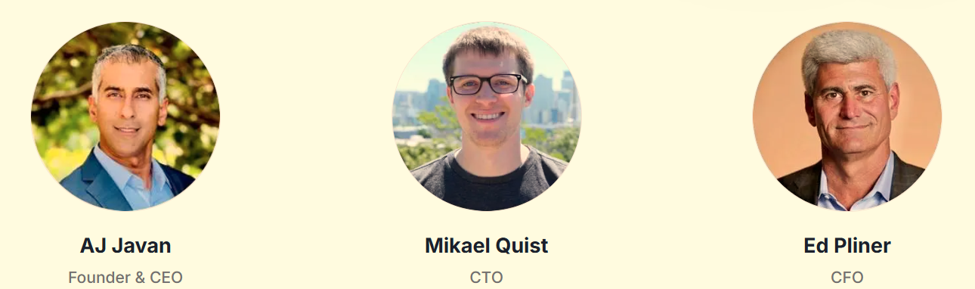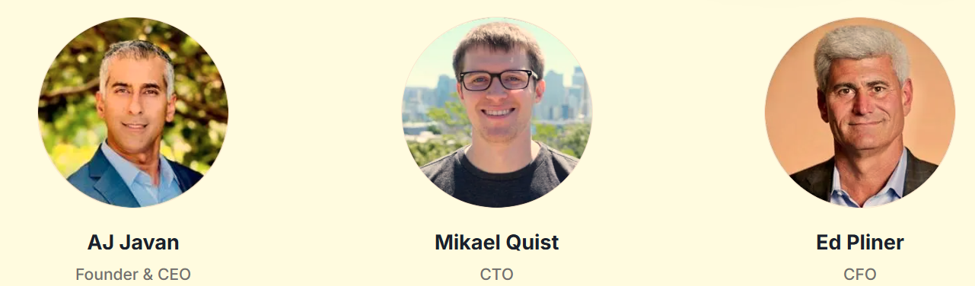
Quick Answer: Mikael Quist is the CTO of Qoob Technologies. Before Qoob, he led technology and infrastructure work at Amazon, including Amazon Prime’s technology and global freight routing. That experience is why Qoob, a personal AI search app, can feel simple to use: ask a plain question, get one short, relevant answer, and move on.
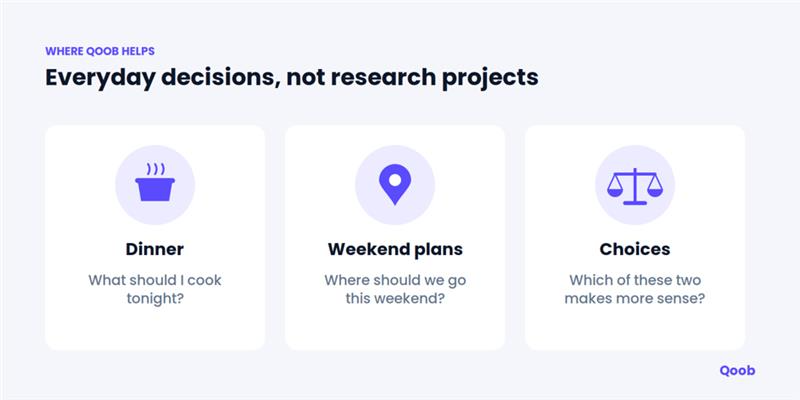
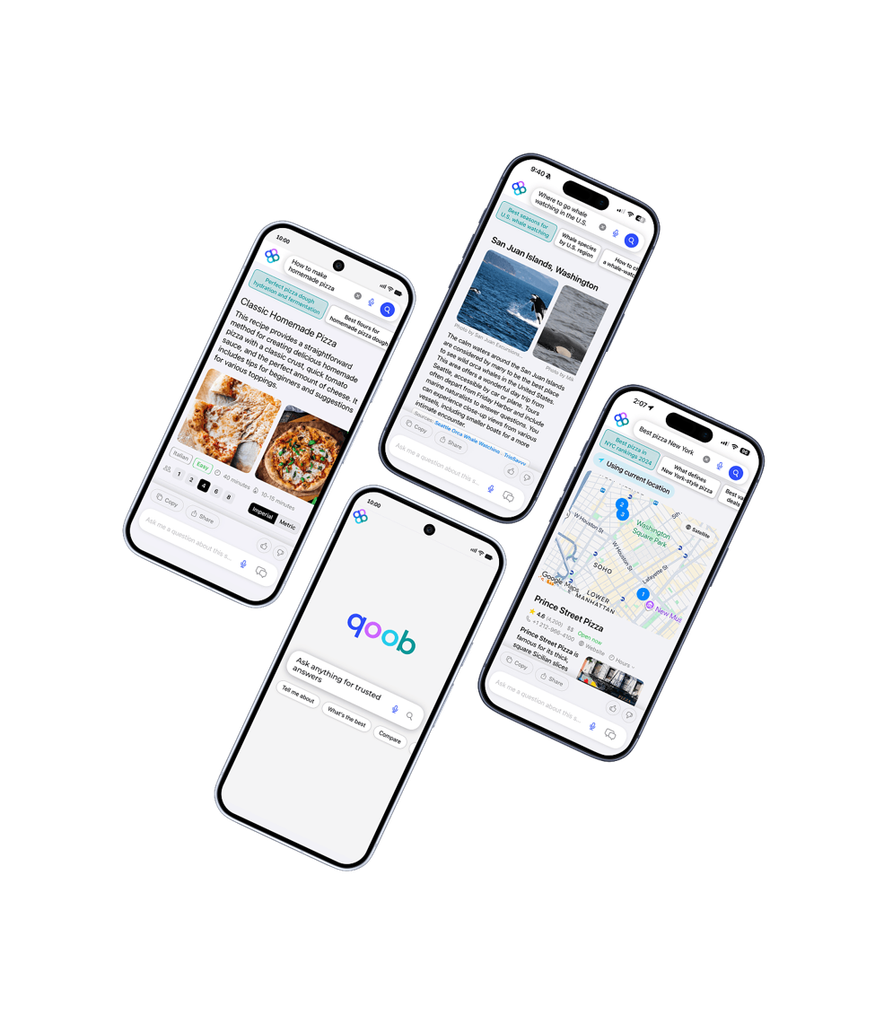
Most people never think about what’s running behind an app they use to answer a quick question. That’s the point. Qoob is a personal AI search app built to feel simple: ask a plain question, get one short answer, get on with your day. Making that feel effortless takes serious engineering underneath, and that’s where Qoob CTO Mikael Quist comes in.
A background built for scale
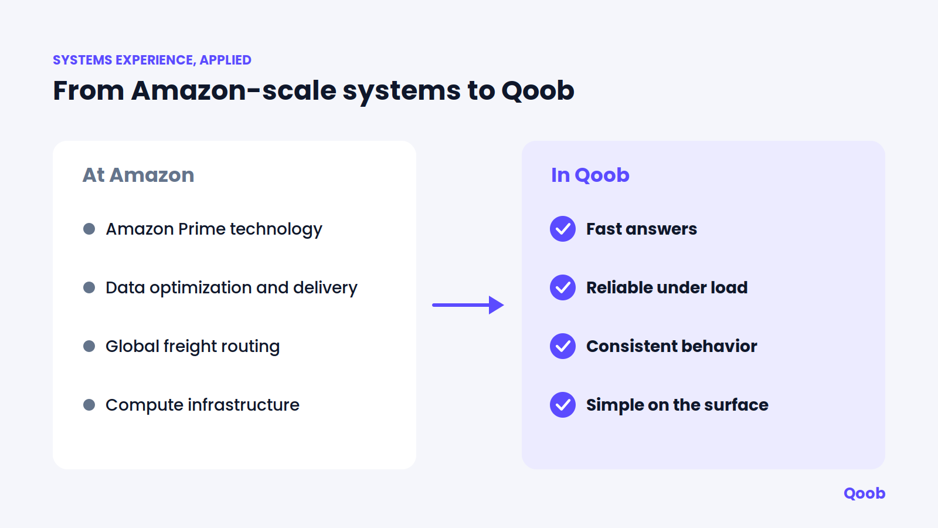
Before joining Qoob, Quist spent years leading technology, engineering, and compute infrastructure work at Amazon. His work there included:
- Scaling parts of Amazon Prime’s technology
- Data optimization and delivery systems
- Global freight routing, work that helped create billions in value
That kind of experience teaches more than how to write code. It teaches how systems behave under real pressure, at real scale, with real consequences when something breaks. Quist also has a wider background across IT, including multi-platform data centers and large-scale energy optimization. He holds an MS in Industrial and Systems Engineering from the University of Minnesota.
That mix of software, systems, and operations thinking is exactly what a product like Qoob needs behind the scenes.
Why reliability matters more in AI search
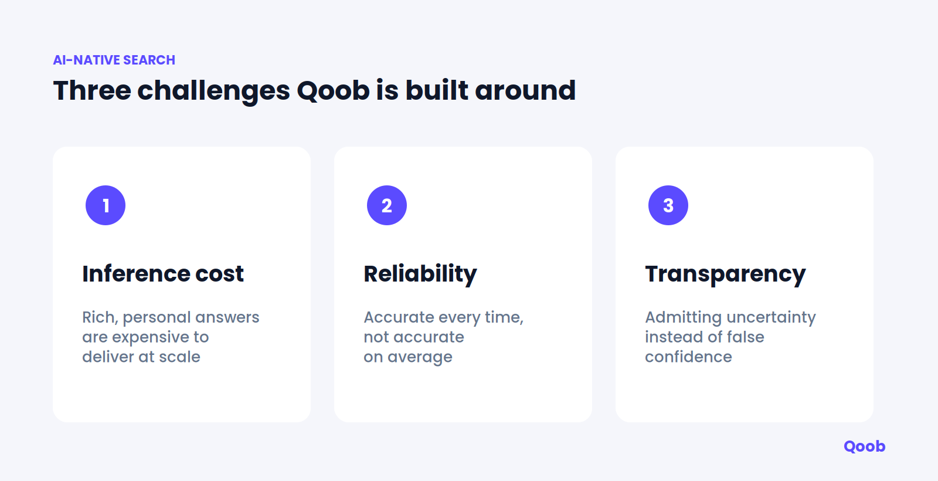
In a recent interview with Information Security Media Group (ISMG), Quist explained why AI-native search faces a different set of challenges than traditional search engines:
- High inference costs, which make rich, personalized answers harder to deliver at scale
- Reliability, since answers need to be consistently accurate, not accurate on average
- Transparency, especially admitting uncertainty instead of answering with false confidence
These aren’t abstract concerns. They’re operational problems, and someone who has run large systems at Amazon scale is well placed to solve them. It’s a big part of why Quist’s background translates directly into how Qoob AI is built.
Preparing for the shift from answers to actions
Quist has also talked about where search goes next: from systems that answer questions to AI that can take action on your behalf. Most of today’s search infrastructure wasn’t built for that:
- Results pages designed to hand traffic to other sites, not finish tasks
- Ad systems built around clicks and impressions rather than outcomes
Meeting that shift means building with different assumptions from day one. That’s a core part of Quist’s role at Qoob: making sure the systems underneath deliver fast, reliable answers now, while leaving room for more capable features later. For his full take, read why keyword search is reaching its limit.
Trust comes from consistent behavior
Quist has been clear that trust in AI isn’t about good intentions. It comes from consistent behavior over time. In practice that means:
- Systems that behave reliably, not only most of the time
- Answers that stay consistent with the context a user has shared
- Design that keeps users in control of their own personal context
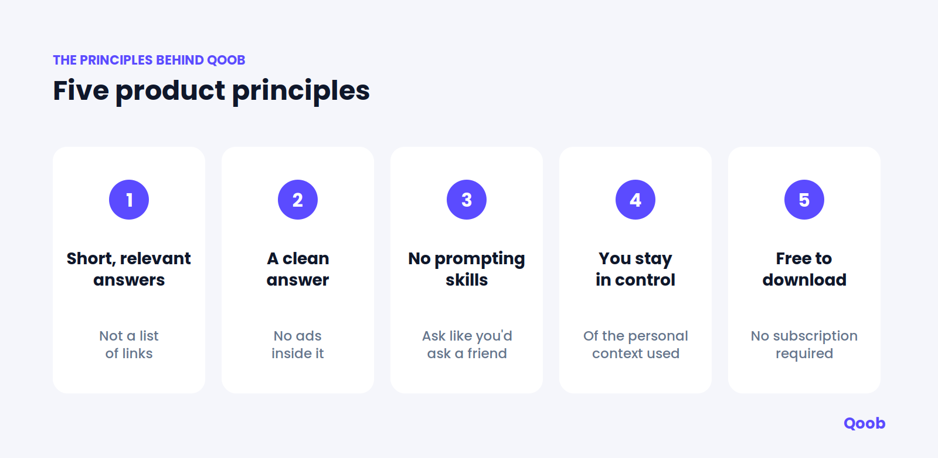
You can see this in the product. Users stay in control of the context Qoob uses, and the answer itself stays clean of ads. Learn more on the Qoob Difference.
What this means for you
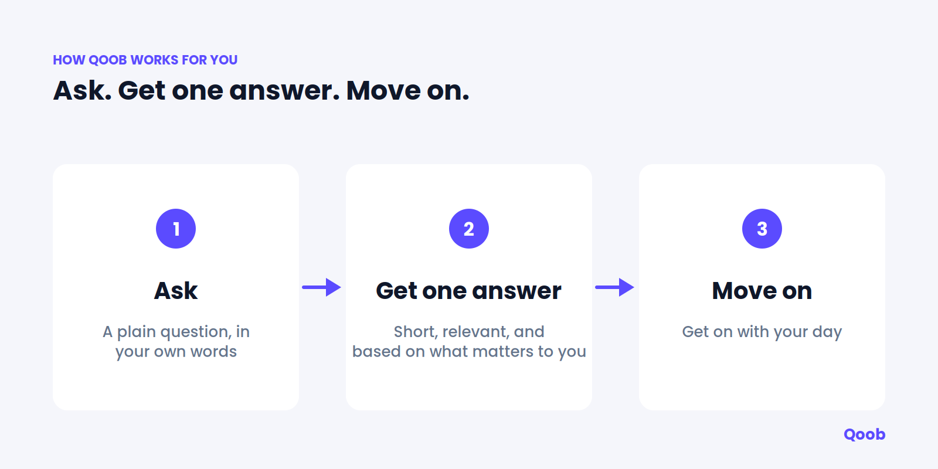
Quist’s job is to keep the complexity behind the curtain so the experience in front of it stays simple:
- Ask a question in plain language
- Get one short, relevant answer
- Move on with your day
That simplicity is only possible because of the work happening underneath. Read more about how the product works on About Qoob, or the bigger picture on Why Qoob.
Curious to see it in action? Get the app for free, or sign in if you already have an account.
FAQ
What is Mikael Quist’s professional background?
He spent years leading technology, engineering, and compute infrastructure work at Amazon, including Amazon Prime’s technology and global freight routing, before joining Qoob Technologies as CTO.
What is Mikael Quist’s educational background?
He holds an MS in Industrial and Systems Engineering from the University of Minnesota.
Why does infrastructure experience matter for a personal AI search app?
Delivering fast, reliable, personalized answers at scale takes strong systems engineering, not only a good product idea.
What challenges does Mikael Quist see in AI-native search?
High inference costs, reliability of answers, and transparency about uncertainty.
How does Mikael Quist’s thinking shape Qoob’s approach to trust?
Through consistent system behavior, user control over personal context, and an answer that stays clean of ads.
Where can I learn more about Qoob and its team?
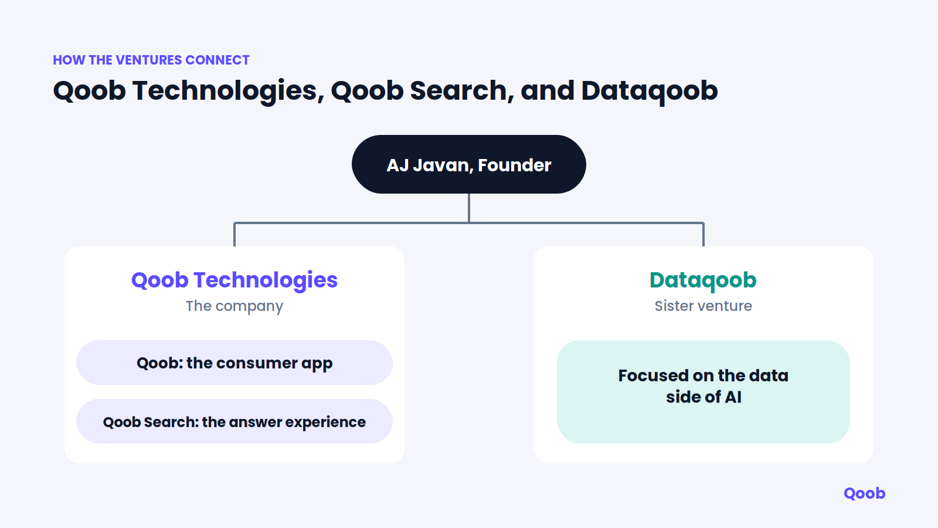
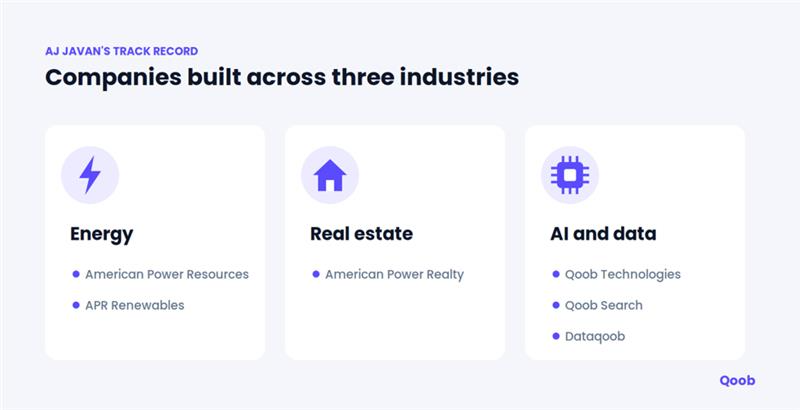
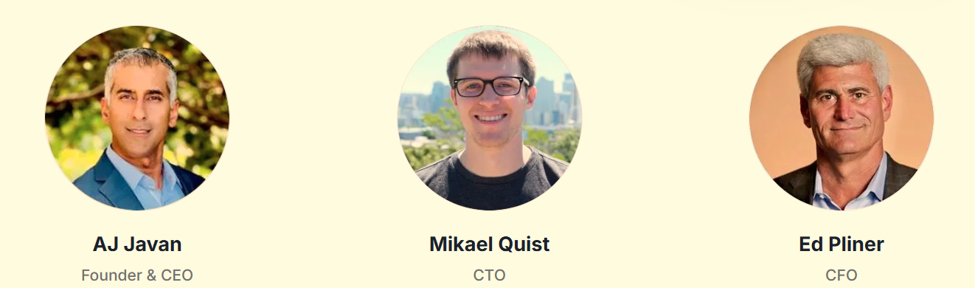
Visit About Us to meet the full leadership team, including founder AJ Javan.