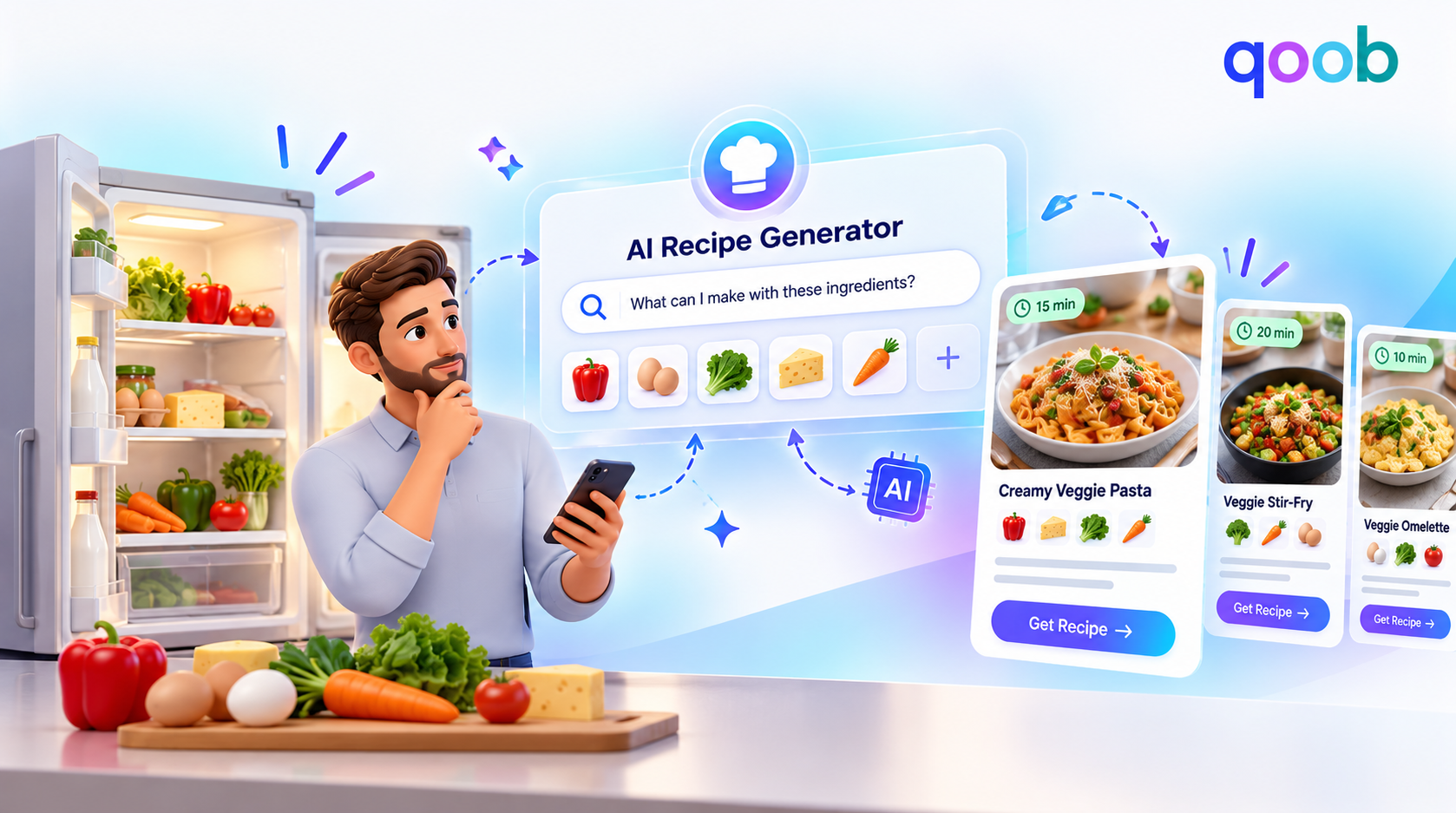
You open the fridge after a long day and see half an onion, a few eggs, some vegetables and a piece of chicken. There is food in the kitchen, but no obvious meal.
So you ask the question millions of people ask every week:
What can I make with these ingredients?
The problem is often not a lack of food. It is a lack of ideas.
You may have enough ingredients for a good meal but no recipe that uses exactly what you have. Traditional recipe searches can make this worse because they often give you hundreds of options that require ingredients you do not own.
An AI recipe generator takes a different approach. Instead of starting with a recipe and asking you to shop for it, you start with the ingredients already available and ask the AI to build a meal around them.
That simple change can make deciding what to cook much easier.
Why the Empty-Fridge Problem Is Really a Decision Problem
Most “empty fridge” situations are not literally empty.
There is usually something available:
- A protein
- A few vegetables
- Leftover rice or pasta
- Eggs
- Bread or tortillas
- Basic sauces and seasonings
The challenge is working out how those ingredients can become a complete meal.
This is where decision fatigue comes in.
You search for dinner ideas, open several recipes, compare ingredients, check cooking times and then realise that every recipe needs something you do not have.
After enough searching, ordering takeaway starts to look easier.
An AI-based approach can reduce the number of decisions you need to make.
What Can I Make With These Ingredients? Start With What You Have
The easiest way to solve the dinner problem is to stop asking:
“What recipe should I follow?”
Instead, ask:
“What meal can I build from what I already have?”
For example, imagine your kitchen contains:
Chicken + capsicum + onion + rice + soy sauce
You could turn that combination into a stir-fry, rice bowl, fried rice or another simple skillet meal.
Now change the ingredients:
Eggs + spinach + tomatoes + bread
That could become an omelette, scrambled eggs with vegetables, a breakfast-style sandwich or a simple toast meal.
The point is not to find one perfect recipe. It is to identify a few sensible possibilities from the ingredients you already own.
How an AI Recipe Generator Works
A traditional recipe search generally starts with a known dish.
You search for:
“chicken pasta recipe”
The search engine returns recipes for chicken pasta.
But what happens when your kitchen does not match the recipe?
An AI recipe generator can work from the other direction. You tell it what you have, and it can suggest meals that fit those ingredients.
You might enter:
“I have chicken breast, broccoli, garlic, rice and soy sauce. What can I make in 30 minutes?”
That question contains more useful context than simply searching for “chicken recipes”.
You have provided:
- The ingredients
- The available protein
- A cooking-time limit
- A likely flavour direction
- The type of result you want
The better the context, the more relevant the suggestions can become.
Why Ingredient-Based Recommendations Are Useful
Ingredient-based recommendations solve a very specific problem: you are trying to use what you already have.
That has several practical benefits.
It can reduce food waste
Ingredients sitting unused in the fridge often get forgotten until they are no longer fresh.
Building meals around what you already have can help you use ingredients before they go to waste.
It can save money
You do not always need another trip to the supermarket.
A useful meal may already be sitting in your kitchen. You just need a way to connect the ingredients.
It can save time
Instead of browsing recipe websites for twenty minutes, you can start with a clear list of ingredients and ask for suitable ideas.
It can make leftovers more useful
Last night’s rice, vegetables or cooked chicken can become part of today’s meal instead of being ignored in the back of the fridge.
What to Make for Dinner When You Have Random Ingredients
Random ingredients are not necessarily a problem.
In fact, they can be a useful starting point.
Try grouping what you have into three categories:
1. Main ingredient
Start with the most substantial item.
This might be chicken, beef, fish, tofu, eggs or beans.
2. Base
Next, look for something that can make the meal filling.
Rice, pasta, potatoes, noodles, bread and tortillas are common examples.
3. Supporting ingredients
Then add vegetables, herbs, spices, sauces or other ingredients that add flavour.
Once you think about your kitchen this way, it becomes easier to answer what to make for dinner without needing a specific recipe in mind.
For more ideas on reducing the stress around this decision, you can also read our guide to a simpler way to decide what to cook.
AI Can Suggest Meals Beyond Exact Recipe Matches
One of the useful differences between an AI recipe generator and a basic recipe database is flexibility.
A recipe database may work best when you already know what you want.
AI can be useful when you do not.
You can give it constraints such as:
“I have these ingredients, but I do not want anything spicy.”
Or:
“What can I make with these ingredients for four people?”
Or:
“I only have 20 minutes.”
Or:
“I want something high in protein.”
The goal is not simply to identify a recipe containing the same ingredients.
It is to find an option that fits the situation.
What If You Are Missing One or Two Ingredients?
This is where flexibility becomes especially useful.
Suppose you find a recipe that looks perfect but requires fresh parsley and you do not have any.
That does not necessarily mean you cannot make the dish.
An AI tool can help suggest substitutions or simplify the recipe based on what is available.
For example:
- Spinach instead of another leafy green
- Rice instead of noodles
- Chicken instead of another protein
- Yoghurt instead of sour cream
- A different vegetable based on what is in the fridge
Not every substitution will work in every recipe, so basic cooking judgement still matters. The value of AI is that it can help you explore sensible alternatives faster.
AI Recipe Generators Are Most Useful When You Give Them Context
A vague request can produce vague ideas.
Compare:
“Give me dinner ideas.”
with:
“I have chicken thighs, carrots, potatoes and garlic. I have an oven, 45 minutes and need dinner for three people. What can I make?”
The second prompt gives the system much more to work with.
You can make recommendations more useful by including:
- Ingredients you have
- Ingredients you do not have
- Number of people
- Cooking time
- Cooking equipment
- Dietary preferences
- Foods you dislike
- Desired meal style
This is one reason modern AI search can be useful for everyday decisions. Rather than searching only for keywords, the interaction can include the context behind the question. Our overview of how shorter AI search answers work explains why asking a complete question can produce a more useful result than sorting through a long list of links.
Can AI Help With Leftovers?
Absolutely, and leftovers are one of the most useful starting points.
Imagine you have:
Leftover roast chicken + cooked rice + vegetables
Instead of reheating the same meal, you could turn those ingredients into a rice bowl, fried rice, wraps, soup or another simple dish.
The same principle works with small quantities.
A few vegetables can become part of an omelette. Leftover pasta can become a baked dish. Cooked meat can become a filling for wraps or sandwiches.
The question changes from:
“What recipe uses this exact amount?”
to:
“What can I make with these ingredients before they go to waste?”
That is a much more practical question.
How The Qoob Fits Into Dinner Decisions
The Qoob is built around everyday questions where the hardest part is often deciding what to do next.
Dinner is a good example.
You may not need a huge recipe collection. You may simply need an answer that takes your ingredients, preferences and situation into account.
That is the thinking behind what to make for dinner: start with the real-life problem rather than forcing the user to work backwards from a list of recipes.
Instead of opening ten tabs and comparing options, you can describe what is in your kitchen and what kind of meal you want.
The answer can then become a starting point for the meal.
What an AI Recipe Generator Cannot Replace
AI can help with ideas, but it should not replace common sense in the kitchen.
You still need to check:
Food safety
Make sure meat, seafood and eggs are cooked safely. Do not assume that an AI-generated cooking time is appropriate for every ingredient or appliance.
Allergies
If you have a serious food allergy, verify every ingredient and substitution yourself.
Ingredient quality
AI cannot see whether the vegetables in your fridge are still fresh unless you provide that information.
Personal taste
A technically suitable recipe may still not be something you enjoy eating.
AI is best treated as a planning tool. You remain responsible for the final cooking decisions.
Why This Approach Is Better Than Searching for “Dinner Recipes”
Traditional search is still useful when you already know what you want.
You can search for:
“classic lasagne recipe”
or
“how to make Thai green curry.”
The search intent is clear.
But when the question is:
“I have three vegetables, two eggs and leftover rice. What can I make?”
you are not really looking for a particular recipe.
You are looking for a decision.
That is where an AI-powered recommendation can be more useful.
Instead of searching for the perfect page, you describe the problem and work backwards from your available options.
A Simple Prompt for Your Next Empty-Fridge Night
You do not need complicated prompting.
Try something like:
“What can I make with these ingredients: chicken, broccoli, rice, garlic and soy sauce? I have 30 minutes and want something simple for two people.”
You can then refine the answer:
“Make it healthier.”
Or:
“I do not want to use the oven.”
Or:
“Give me three options.”
Or:
“Use the chicken and broccoli first because they need to be eaten soon.”
This turns dinner planning into a conversation rather than a long search session.
Final Thoughts
The empty-fridge problem is often not about having nothing to eat. It is about not knowing how to turn the ingredients you have into something worth making.
That is why the question what can I make with these ingredients is so useful.
An AI recipe generator can take the ingredients, time, preferences and limitations you provide and turn them into practical meal ideas. It does not need to find one perfect recipe. It can help you discover what is possible with what you already have.
For everyday decisions like dinner, that can be more useful than scrolling through endless recipes.
When you are staring into the fridge wondering what to make, start with what is already there. Then let the question lead the way.
That is the kind of everyday problem-solving experience The Qoob is designed to support. You can explore the broader approach at The Qoob.
Frequently Asked Questions
What can I make with these ingredients?
Start by listing the main ingredients you have, then add your cooking time, preferred cuisine, dietary needs and available equipment. An AI recipe generator can use that information to suggest meals that fit your situation.
What is the best AI recipe generator?
The best option depends on what you need. Look for a tool that can work with the ingredients you actually have and lets you add useful context such as cooking time, dietary preferences and serving size.
Can an AI recipe generator create recipes from ingredients I already have?
Yes. You can provide a list of available ingredients and ask for meal ideas or recipes based on them. You can also specify restrictions, cooking time and the number of people you are feeding.
What can I use instead of searching for what to make for dinner?
You can start with the ingredients already available and ask an AI tool for suggestions. This can reduce the need to browse through recipes that require ingredients you do not have.
Can AI suggest substitutions for missing ingredients?
Yes, AI can suggest possible substitutions, but you should still check whether the substitute is appropriate for the recipe, dietary requirements and food allergies.
Is an AI-generated recipe always safe to follow?
No. AI-generated suggestions should be checked before cooking. Pay particular attention to food safety, cooking temperatures, allergens and the condition of your ingredients.